Autonews china: key auto industry trends and new model launches
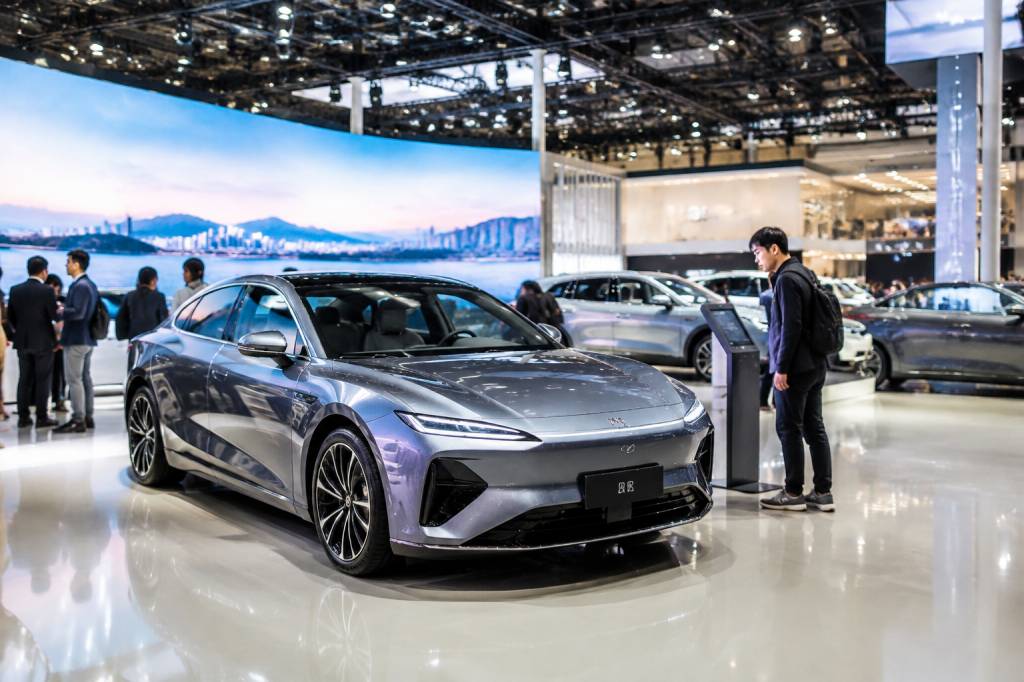
Autonews china: key auto industry trends and new model launches
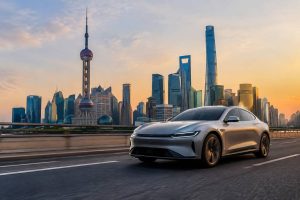
China’s automotive industry is no longer simply the world’s largest production line. It has become one of the most aggressive laboratories for electric mobility, software-defined vehicles, battery technology and high-speed industrial strategy. From Shanghai to Shenzhen, new models arrive with the regularity of a traffic light changing from red to green—and sometimes with about the same amount of waiting time.
For anyone following AutoNews China, the essential question is no longer whether Chinese manufacturers can compete globally. They already can. The more interesting question is this: how quickly will they reshape the rules of the international automotive market?
The answer is taking shape through a combination of competitive electric vehicles, rapid product cycles, sophisticated digital systems and a growing appetite for overseas expansion. Established brands such as BYD, Geely, SAIC and Chery are strengthening their positions, while younger names including NIO, XPeng, Li Auto, Zeekr and Xiaomi are pushing technology and design into new territory.
China remains the electric vehicle powerhouse
The most important trend is still electrification. China has built an enormous ecosystem around battery-powered vehicles, covering raw materials, battery cells, electric motors, power electronics, charging infrastructure and vehicle assembly. This vertical integration gives local manufacturers a significant advantage in cost and speed.
Battery electric vehicles and plug-in hybrids now represent a substantial share of new-car sales in China. The market is particularly dynamic because consumers are not choosing between a small selection of electric models. They can compare dozens of sedans, SUVs, city cars and premium vehicles, often equipped with advanced driver assistance as standard.
BYD remains the heavyweight in this race. Its broad portfolio ranges from affordable models such as the Seagull and Dolphin to premium vehicles sold under the Denza and Yangwang names. The company’s plug-in hybrid technology has also allowed it to reach drivers who want electric commuting without giving up the flexibility of a combustion engine for longer journeys.
This dual approach matters. Pure electric vehicles attract urban buyers with access to home or workplace charging, while plug-in hybrids appeal to families travelling across large distances. In a country where a road trip can stretch for hundreds of kilometres before the next major city appears, range anxiety is not merely a marketing phrase—it is a logistical consideration.
Plug-in hybrids are having a serious moment
While battery electric vehicles receive most of the headlines, plug-in hybrid technology is becoming one of China’s most powerful growth engines. BYD’s DM-i system, Geely’s Leishen technology and similar solutions from other manufacturers offer low fuel consumption, quiet electric driving and the reassurance of a combustion engine.
Many modern Chinese plug-in hybrids can cover daily journeys almost entirely on electric power. The petrol engine then acts as a backup for longer trips. This is particularly attractive in regions where public charging infrastructure is improving but not yet perfectly convenient.
Extended-range electric vehicles are also gaining momentum. Brands such as Li Auto have built their identity around large SUVs using an internal combustion engine as a generator rather than directly driving the wheels. The formula combines a smooth electric drivetrain with long-distance practicality.
It is a clever compromise, although the engineering explanation can become longer than the charging cable. For buyers, the logic is simple: electric performance around town, fewer charging concerns on holiday and a cabin designed for family comfort.
New model launches are moving at full throttle
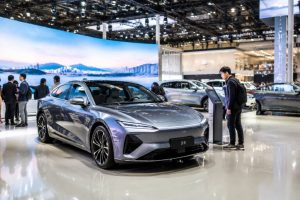
One of the defining features of the Chinese market is the speed at which manufacturers launch new models and update existing ones. Product cycles are often shorter than those traditionally seen in Europe, Japan or North America. A vehicle introduced today may receive significant software improvements, battery upgrades or autonomous-driving features within a relatively short period.
Several recent and upcoming models demonstrate this approach:
- BYD Seagull: A compact electric hatchback designed to make zero-emission driving more accessible. Its small dimensions, efficient battery and competitive pricing have made it an important model in the mass market.
- BYD Seal: A sleek electric sedan aimed at buyers who want performance, range and a more dynamic alternative to conventional family cars. Its design gives the impression that aerodynamics has finally learned how to wear a tailored suit.
- BYD Shark: A plug-in hybrid pickup that reflects the brand’s ambition to enter new categories and international markets, including regions where pickups are essential working tools.
- Zeekr 007: A technology-focused electric sedan combining fast charging, a minimalist interior and premium positioning under Geely’s expanding electric brand.
- Zeekr 009: A luxurious electric multi-purpose vehicle aimed at customers who want first-class comfort, large screens and executive-level space.
- Li Auto Mega: A large electric MPV designed for family and business users, with an emphasis on interior space, fast charging and long-distance travel.
- Xiaomi SU7: The smartphone giant’s first production car, a sporty electric sedan that immediately attracted attention through its technology integration, performance figures and aggressive pricing.
- Huawei-backed models: Vehicles sold through partnerships such as Aito and Luxeed showcase Huawei’s influence in infotainment, connectivity, sensors and intelligent driving systems.
The arrival of the Xiaomi SU7 is particularly significant. Xiaomi entered the car industry with a strong consumer-electronics identity, an established software ecosystem and an enormous fan base. The SU7 is not simply a new electric sedan; it is a statement that the boundaries between technology companies and car manufacturers are becoming increasingly blurred.
Software is becoming a central selling point
Chinese manufacturers are treating software as a core automotive feature rather than an accessory. Large central screens, voice assistants, over-the-air updates and smartphone-style interfaces are now common across the market.
Drivers can control climate settings, navigation, entertainment and vehicle functions through voice commands. Some systems are designed to understand natural language rather than rigid instructions. In premium models, passengers may also benefit from advanced rear-seat displays, gaming functions and seamless smartphone integration.
More importantly, software is transforming the way cars are developed. Manufacturers can launch a vehicle with a strong hardware platform and continue improving it through remote updates. Acceleration settings, charging management, navigation functions and driver-assistance capabilities can evolve after delivery.
This creates a new relationship between the owner and the manufacturer. The car is no longer finished when it leaves the factory. It is more like a connected device with four wheels, a battery and a surprisingly large appetite for data.
Advanced driver assistance is moving quickly
China is also a major testing ground for advanced driver assistance systems. Technologies such as adaptive cruise control, lane-centering, automatic parking and navigation-assisted driving are becoming increasingly common, even outside the luxury segment.
Companies including Huawei, XPeng, NIO and Baidu-backed platforms are developing systems that use cameras, radar and lidar to understand the road environment. In major cities, some vehicles can assist with complex urban manoeuvres, lane changes and parking operations.
However, the terminology deserves careful attention. Driver assistance is not the same as fully autonomous driving. The driver remains responsible for monitoring the road and taking control when necessary. Marketing departments may enjoy futuristic language, but physics and traffic regulations still have the final word.
Chinese cities provide a demanding environment for these systems. Dense traffic, electric scooters, pedestrians, buses and rapidly changing road layouts create a real-world test that cannot be replicated in a quiet laboratory. The data collected from these conditions is becoming a strategic asset for manufacturers.
Price competition is reshaping the market
China’s electric vehicle sector is experiencing intense price competition. Manufacturers are fighting for market share through lower prices, improved specifications and frequent promotions. This benefits consumers, but it also creates financial pressure across the industry.
A model may offer a large battery, fast charging, a premium interior and advanced driver assistance at a price that would have seemed impossible only a few years ago. The downside is that profit margins can become extremely thin. Not every manufacturer will survive a market where new competitors appear before yesterday’s brochure has had time to collect dust.
Tesla has participated in this pricing battle, particularly through adjustments to Model 3 and Model Y pricing. Local brands, meanwhile, are using equipment and technology to challenge Tesla’s traditionally strong position in efficiency, software and brand recognition.
Consumers are benefiting from the rivalry, but suppliers and smaller carmakers face a tougher reality. Consolidation is likely to continue, with stronger companies acquiring technology, distribution networks or weaker competitors. The Chinese market may eventually contain fewer brands, but those that remain could be much more powerful.
Global expansion is accelerating
Chinese carmakers are increasingly looking beyond their domestic market. Europe, Southeast Asia, Latin America, the Middle East and Australia have become important destinations for electric and hybrid models.
BYD has expanded rapidly in international markets, offering models such as the Atto 3, Dolphin, Seal and Seal U, depending on the region. MG, now owned by SAIC, has also established a strong presence in Europe with electric and hybrid vehicles. Geely is using brands such as Volvo, Polestar and Zeekr to build a broad international portfolio.
Chery, Great Wall Motor and Dongfeng are also increasing their global activity. Their strategy may include direct exports, local assembly, partnerships with distributors and the construction of regional production facilities.
Exporting vehicles is only one part of the challenge. Manufacturers must adapt to local safety standards, emissions rules, cybersecurity requirements, taxation systems and customer expectations. A car that succeeds in Shenzhen may need different equipment, suspension tuning or warranty support to appeal to buyers in Berlin, Bangkok or Buenos Aires.
European policymakers are paying close attention. Concerns about subsidies, industrial competition and the future of local manufacturing have led to stronger scrutiny of Chinese electric vehicle imports. Tariffs and trade measures could affect pricing, production strategies and investment decisions over the coming years.
Factories are becoming strategic weapons
China’s automotive success is supported by a massive manufacturing base. Battery plants, semiconductor suppliers, robotics companies and logistics networks operate alongside vehicle factories, allowing new products to move from concept to production at impressive speed.
Manufacturers are now exporting this industrial model. BYD has announced and developed production projects outside China, while other brands are exploring local assembly to reduce shipping costs and avoid trade barriers.
Local production can also improve a brand’s credibility. Customers and governments are often more receptive when a company invests in regional jobs, supplier networks and technical facilities. In the global automotive game, a factory is not just a building—it is a diplomatic handshake made from steel and concrete.
What should buyers watch next?
The next phase of China’s automotive development will likely focus on four areas: affordable electric vehicles, ultra-fast charging, intelligent driving and premium export models.
- More affordable EVs: Smaller cars with efficient batteries could bring electric mobility to a much wider audience.
- Faster charging: High-voltage platforms promise shorter stops, reducing one of the main objections to battery-powered travel.
- Better battery technology: LFP chemistry remains popular for its cost and safety, while solid-state and semi-solid-state batteries are being developed for greater range and energy density.
- Smarter interiors: Voice assistants, connected services and personalized interfaces will become increasingly important in the ownership experience.
- More international launches: Chinese brands will continue refining models for European, Asian, Middle Eastern and Latin American customers.
The Chinese auto industry is moving too quickly to be viewed through yesterday’s assumptions. It is not simply copying established manufacturers, nor is it relying solely on low prices. Its strongest companies are combining industrial scale, digital expertise, battery leadership and an instinct for rapid iteration.
For drivers, that means more choice—and more difficult decisions. Should the priority be range, charging speed, software, comfort, performance or price? Increasingly, one vehicle can offer all five, which is wonderful news for buyers and rather uncomfortable news for traditional automakers.
China’s next wave of vehicles will not merely add more cars to the world’s roads. It will influence how cars are designed, sold, updated and experienced. The steering wheel is still familiar, but the industry behind it has changed gear.