Are auto sales down? What current market data reveals
Are auto sales down? What current market data reveals
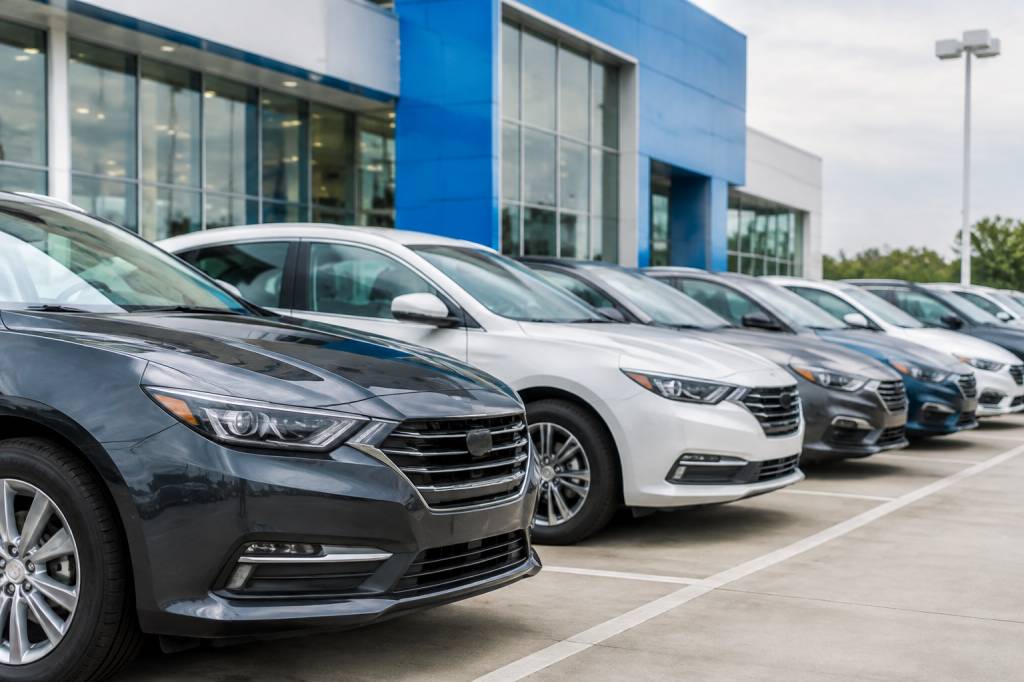
Walk into a dealership today and the first impression can be misleading. There are more vehicles on the lot, incentives are returning, and the frantic “sold before it arrived” atmosphere of 2021 feels like a distant memory. So, are auto sales down?
The short answer is: sometimes, in some markets, and for very specific reasons. The global automotive industry is not moving in one clean direction. New-vehicle sales have broadly recovered from the semiconductor crisis, but affordability, high interest rates, changing electric-vehicle demand and uneven economic growth are putting pressure on the accelerator pedal.
In other words, the market is not stalling. It is shifting gears.
The headline numbers tell only part of the story
In the United States, new light-vehicle sales improved significantly from the supply-constrained years of 2021 and 2022. Sales reached roughly 15.6 million units in 2023, according to industry estimates, with 2024 remaining close to that level at around 15.8 to 16 million vehicles depending on the data source and final reporting adjustments.
That is well below the 17-million-plus annual volumes seen in the middle of the previous decade. However, it is not a collapse. It is better described as a market returning to a more normal operating range after several years of mechanical, logistical and economic turbulence.
Globally, vehicle sales have also shown resilience. China remains the largest market and a major growth engine, while India continues to expand. Europe has been more subdued, and several emerging markets are feeling the effects of currency pressure and expensive financing.
The important distinction is this: unit sales may be stable, but the conditions surrounding those sales have changed dramatically.
Why car shoppers are hesitating
The biggest obstacle for many buyers is not a lack of interest in replacing their vehicle. It is the monthly payment.
New-vehicle prices rose sharply during the pandemic as inventory disappeared and dealers had little reason to discount. Although average transaction prices have eased from their peak, they remain far higher than they were before 2020. The same applies to interest rates. A buyer who financed a $30,000 vehicle several years ago is facing a very different calculation today when the price is closer to $40,000 and the loan rate has climbed.
That combination creates a financial speed bump:
- Higher vehicle prices require larger loans.
- Higher interest rates increase the cost of those loans.
- Longer loan terms reduce the monthly payment but increase total interest.
- Insurance, maintenance and registration costs add further pressure.
For some households, the result is a decision to keep the current vehicle for another year or two. A well-maintained 2018 crossover may not be exciting, but it is often cheaper than replacing it with a new one. Sometimes the most advanced financial technology is simply changing the oil on time.
Affordability is reshaping the vehicle market
The pressure is particularly visible in the entry-level segment. Small cars and affordable sedans have become less common as automakers focus on SUVs, crossovers and premium trims. These larger vehicles offer stronger profit margins, but they also push buyers toward higher prices.
That creates a contradiction. Consumers want affordability, while manufacturers increasingly depend on expensive models to protect profitability.
Pickup trucks and full-size SUVs remain important to the American market, but sales performance varies by brand and region. Buyers who need a work truck may continue shopping regardless of economic conditions. However, discretionary buyers are more likely to delay a purchase when financing becomes expensive.
Used vehicles provide some relief, although the second-hand market has not returned completely to its pre-pandemic rhythm. Prices have cooled compared with their extraordinary 2021 highs, but many used vehicles remain expensive because they were originally purchased at elevated prices. A three-year-old SUV is no longer automatically a bargain hiding behind a dusty windshield.
Inventory is back, but demand is more selective
One of the clearest changes in the market is inventory. During the semiconductor shortage, buyers often had to reserve a vehicle before seeing it in person. Dealer lots were sparse, and popular models could command prices above the manufacturer’s suggested retail price.
Today, inventories are generally healthier. That is good news for shoppers because it means more choice and greater negotiating power. Automakers and dealers are once again using incentives such as financing offers, lease programs and cash discounts to move slower-selling vehicles.
But increased inventory does not mean every vehicle is struggling. High-demand hybrids, popular pickup configurations and well-equipped compact SUVs can still sell quickly. The weakness is concentrated in certain categories, especially vehicles that are expensive, heavily discounted or less aligned with current consumer preferences.
This is why broad statements such as “car sales are down” can be misleading. One brand may report strong growth while another is cutting production. One model may have a waiting list while a neighboring vehicle sits under showroom lights for months.
Electric vehicles: growth with a few potholes
Electric vehicles remain one of the most debated parts of the market. Are EV sales falling? Again, the answer depends on what is being measured.
Global EV sales continued to grow in 2024, with the International Energy Agency reporting that electric car sales exceeded 17 million worldwide. China accounted for the largest share, and electric vehicles represented a particularly significant portion of new-car purchases there. Europe and North America also expanded their EV volumes, although growth rates moderated in several markets.
The United States has seen continued EV adoption, but the pace has been uneven. Early adopters are already in the market, while mainstream buyers are asking tougher questions about charging access, range in cold weather, battery longevity and resale value.
Automakers have responded by adjusting product plans. Some have slowed the rollout of dedicated electric models, delayed factory investments or placed more emphasis on hybrids and plug-in hybrids. That does not mean the electric transition is reversing. It means the industry has discovered that customers prefer a gradual on-ramp rather than being pushed directly into the fast lane.
Hybrids are benefiting from this hesitation. They offer improved fuel economy without requiring drivers to rethink every long-distance trip. For buyers who want lower fuel costs but are not ready to depend entirely on public charging infrastructure, a hybrid can feel like a sensible middle ground.
Regional differences matter
North America, Europe and Asia are not experiencing the same automotive cycle.
In the United States, vehicle demand remains supported by employment and household income, but affordability is a major concern. Fleet sales and commercial demand help sustain volumes, while retail buyers are more sensitive to financing costs.
Europe faces a different combination of challenges. New-car registrations improved modestly in 2024, with the European Automobile Manufacturers’ Association reporting approximately 10.6 million registrations across the European Union, an increase of less than one percent. Battery-electric vehicles accounted for around 13.6 percent of EU registrations, but demand varied significantly between countries after some government incentives were reduced.
Germany, one of Europe’s largest markets, experienced weakness in battery-electric demand following changes to purchase incentives. Meanwhile, other countries maintained stronger adoption through tax benefits and company-car policies.
China remains the market to watch. Its enormous domestic industry, competitive pricing and rapid EV development are influencing manufacturers around the world. Chinese brands are expanding abroad, while established automakers are trying to respond with new technology, lower costs and more aggressive pricing.
That competition is good news for consumers, although it creates serious strategic pressure for legacy manufacturers. The automotive business is becoming less about simply building a vehicle and more about mastering batteries, software, supply chains and manufacturing efficiency.
Automakers are protecting profits, not just volume
There was a time when selling as many vehicles as possible was the central goal. Today, manufacturers are paying closer attention to profitability per vehicle.
Premium trims, large SUVs and trucks typically generate more revenue than entry-level cars. This strategy helped automakers remain profitable despite production challenges, but it also contributed to the affordability problem. A company can report healthy financial results while many consumers feel priced out of the showroom.
Manufacturers are now trying to balance three competing priorities:
- Keep vehicles affordable enough to attract buyers.
- Maintain margins in a period of higher production and financing costs.
- Invest billions in electrification, software and new factories.
That balancing act is anything but simple. Discount too aggressively and profits suffer. Keep prices high and sales slow. Launch too many new EVs and inventory can build. Launch too few and the company risks falling behind competitors.
What current data means for buyers
For shoppers, a cooler market can be an advantage. More inventory usually means more choice, and more choice improves negotiating power. Buyers should compare several dealers, examine financing from banks and credit unions, and evaluate the total cost of ownership rather than focusing only on the monthly payment.
A low monthly payment can hide a long loan term, a large down payment or expensive add-ons. The number that matters is the total amount paid over the life of the loan.
It is also worth comparing powertrains carefully. A hybrid may cost more upfront but save money at the pump. An EV may offer lower routine maintenance costs but require careful planning around home charging. A gasoline model could remain the most practical choice for drivers without reliable charging access.
Timing matters, but waiting forever is not always wise. Incentives change, inventory changes and interest rates move. The best deal is not necessarily the vehicle with the largest discount; it is the one that fits the buyer’s budget, driving habits and ownership plans.
What to watch in the months ahead
Several indicators will reveal whether the market is genuinely weakening or simply normalizing:
- Transaction prices: Continued declines would improve affordability, especially if manufacturers maintain incentives.
- Interest rates: Lower borrowing costs could bring cautious buyers back into showrooms.
- Inventory levels: Excess stock may trigger discounts, while shortages could quickly restore dealer leverage.
- Used-car prices: A healthier used market would give buyers more alternatives and support trade-in activity.
- EV and hybrid demand: Growth in hybrids may indicate that consumers want electrification, but on their own terms.
- Fleet purchases: Business and rental-fleet demand can significantly influence overall sales figures.
The industry is also watching consumer defaults and delinquencies. If more drivers struggle with auto loans, lenders may become stricter, making it harder for marginal buyers to qualify. That could put additional pressure on sales even if vehicle prices begin to fall.
The road ahead is uneven, not empty
So, are auto sales down? Compared with the record volumes of the mid-2010s, they remain lower in several major markets. Compared with the supply-starved years of the pandemic, however, the industry is in a much stronger position.
The current market is best described as cautious. Buyers are still purchasing vehicles, but they are demanding more value. They are comparing fuel types, calculating financing costs and questioning whether the latest technology justifies the price. Automakers, meanwhile, are learning that strong demand cannot be assumed simply because a new model wears a familiar badge.
The next phase of the automotive industry will not be defined by sales volume alone. Affordability, efficiency, software, battery technology and financial discipline will all determine which brands stay in the fast lane.
For drivers, that may be the most positive development of all. The era of paying whatever the market demanded is fading. With inventory improving and competition returning, shoppers finally have a little more room to steer the deal.