Automotive sector news: key trends shaping the US auto market
Automotive sector news: key trends shaping the US auto market
The US auto market is in one of those fascinating moments where the road ahead looks straight, but the pavement underneath keeps changing. One minute, buyers are chasing incentives on compact SUVs; the next, they’re browsing EV lease deals like they’re checking the weather. If you work in the industry—or just spend too much time staring at spec sheets like the rest of us—2025 is shaping up to be a year where pricing pressure, electrification, software, and supply-chain reality all try to sit in the same driver’s seat.
So what’s actually moving the market right now? Not just the big headlines, but the trends that matter when rubber meets road. Let’s pop the hood and take a proper look.
Pricing is no longer a one-way street
For a while, the market felt like a dealer lot during a heatwave: prices were hot, inventory was tight, and buyers had very little leverage. That era has cooled. The US market is gradually normalizing, and that means pricing power is shifting back toward shoppers in many segments. Dealers are once again using incentives, lease support, and finance offers to move metal.
This doesn’t mean every vehicle is suddenly a bargain. Far from it. Popular trims, high-demand hybrids, and certain trucks still command strong prices. But the days of “take it or leave it” markups on every vehicle are fading. The smart money now is on value-added deals: lower APRs, loyalty cash, conquest rebates, and manufacturer subsidized leases.
What’s behind the shift? A few things:
- Inventory levels have improved compared with the supply-starved years of 2021–2022.
- Interest rates remain elevated, which is cooling some demand.
- Buyers are more price-sensitive, especially with monthly payments under pressure.
- Manufacturers are aiming to protect volume without completely sacrificing margins.
Translation: the market is becoming more rational. A rare event, perhaps, but welcome.
SUVs still rule the driveway
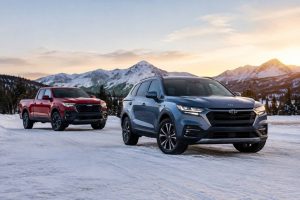
If the US auto market had a crown, it would probably fit a midsize SUV. Crossovers continue to dominate because they hit the sweet spot for many households: higher seating position, usable cargo space, available all-wheel drive, and enough efficiency to avoid guilt at the gas station. It’s the automotive equivalent of ordering fries with your salad and calling it balance.
Compact and midsize SUVs remain especially important because they serve both practical and emotional needs. They’re easy to drive, easier to park than full-size trucks, and available in everything from bare-bones fleet spec to luxury-lined, ventilated-seat territory. Automakers know this, which is why product planning often feels like a competition to see who can launch the next “urban-adventure-ready” crossover with roof rails and black cladding.
But the trend goes deeper than just volume. Consumers are increasingly looking for:
- Better fuel economy without sacrificing space
- Hybrid powertrains as a middle ground between gas and EVs
- Advanced driver assistance features as standard equipment
- Higher resale value and lower total cost of ownership
This is why the SUV segment is such a battleground. The best vehicles are no longer just the biggest or the most powerful; they’re the ones that feel useful every single day. If a model can nail packaging, efficiency, and tech without making the price tag look like a typo, it earns real attention.
Hybrids are having a very strong run
If EV adoption has been the headline act, hybrids are the underrated opening band stealing the show. The US market has clearly embraced electrification, but many buyers are not ready to go fully electric. Hybrids offer a safer bridge: better fuel economy, no charging anxiety, and fewer lifestyle changes. For a lot of drivers, that’s not compromise—it’s common sense with better mpg.
Hybrids are benefiting from a perfect storm of factors. Gas prices remain unpredictable. Electricity access isn’t equally convenient for everyone. And many buyers simply want efficiency without giving up long-range flexibility. That’s especially true for suburban commuters, road-trippers, and families who don’t want their weekend plans to include a charging strategy.
Automakers are responding by expanding hybrid offerings across nearly every major segment. We’re seeing hybrid versions of sedans, SUVs, crossovers, and even trucks. The message is clear: if you can’t win the pure EV battle everywhere, offer a compelling bridge solution that reduces emissions and improves ownership economics.
And the numbers support the trend. Many shoppers who might have once gone straight from gas to EV are now choosing hybrids because they offer a familiar driving experience with a much friendlier fuel bill. In market terms, that’s a very efficient lane change.
EV growth is real, but the market is getting selective
Electric vehicles are no longer a novelty. They’re firmly part of the US landscape. But the phase of easy, blanket growth is giving way to something more mature: selective demand. Buyers are becoming choosier about range, charging speed, software quality, and real-world practicality. In other words, the market is learning to ask the right questions instead of just admiring the dashboard glow.
Range anxiety still matters, but not in the way it once did. The bigger issue now is charging convenience. Buyers want fast charging that actually performs as advertised, reliable charging networks, and vehicles that manage battery preconditioning intelligently. A beautiful EV with a giant screen means very little if the charging experience feels like waiting for a fax machine in the rain.
Another key factor is pricing. Incentives have become important in the EV segment as manufacturers work to stimulate demand. Lease deals in particular have become a major lever, allowing brands to make EVs look more approachable on a monthly payment basis. This has helped keep momentum alive, especially among mainstream buyers who are intrigued by EVs but still sensitive to upfront cost.
What’s emerging is a more realistic EV market. The hype is not gone, but it has been replaced by scrutiny. That’s healthy. A market built on enthusiasm alone can skid; one built on value and usability can actually steer.
Software is now part of the product, not just the interface
Modern cars are rolling computers, and that’s not marketing fluff anymore—it’s the reality of how vehicles are designed, sold, and experienced. Software now affects everything from infotainment and navigation to battery management, driver-assistance systems, and over-the-air updates. For automakers, this changes the game. For buyers, it changes expectations.
A decade ago, “tech” in a car often meant Bluetooth, a backup camera, and maybe a decent navigation system. Today, drivers expect:
- Over-the-air updates that improve the vehicle after purchase
- Smarter voice assistants
- Advanced ADAS features that feel seamless rather than intrusive
- Connected services that are actually useful
- Interfaces that don’t require a PhD in menu navigation
The tricky part? Software quality can make or break a vehicle’s reputation. A strong powertrain can be undermined by a clunky infotainment system. A luxury badge can lose some shine if the screen freezes or the menus feel like a maze designed by an overcaffeinated engineer. On the flip side, good software can elevate a model and create loyalty that lasts beyond the lease term.
This is why many OEMs are investing heavily in software development, partnerships, and in-house platforms. The goal is no longer just to sell a car. It’s to create an ecosystem. Whether consumers love that idea or merely tolerate it depends on one thing: whether the tech actually makes life easier.
Trucks remain the profit engine, but the segment is changing
In the US, trucks are still the financial backbone of the industry. Full-size pickups are not just vehicles; they’re profit machines with tailgates. They carry huge margins, loyal buyers, and enough trim variation to make a spreadsheet cry. But even this fortress of profitability is evolving.
Buyers now expect trucks to be comfortable daily drivers, not just tools. That means more premium interiors, larger screens, better towing tech, improved ride quality, and driver-assistance features that reduce fatigue on long hauls. The workhorse image is still there, but the modern truck also needs to be a family vehicle, a commuter, and a tech showcase.
At the same time, electrified trucks are adding another layer of complexity. They promise instant torque, low-end pulling power, and new utility features. But they also face the same challenge as EVs in general: cost, charging, and real-world use cases. For some buyers, an electric truck is a dream. For others, it’s a very expensive tool that still needs to prove itself in the mud, the heat, and the towing lane.
One thing is certain: the truck segment is no longer just about displacement and tow rating. It’s about integrated technology, fuel efficiency, and ownership economics. The torque curve still matters, but so does the monthly payment.
Consumer financing is shaping purchase decisions more than ever
A vehicle’s sticker price tells only part of the story. Today, monthly payment sensitivity is one of the strongest forces in the market. With higher borrowing costs, many buyers are less interested in the total MSRP and more focused on what the payment looks like over 36, 48, or 60 months. And that, naturally, changes the way automakers and dealers structure offers.
Leasing has become especially important in this environment. It can lower the apparent monthly cost, support EV adoption, and help manufacturers move inventory. But buyers are also getting more sophisticated. They’re comparing money factors, residual values, mileage limits, and end-of-lease exposure. The modern car shopper is part consumer, part financial analyst.
There’s also a growing divide between well-qualified buyers and those who are more payment-constrained. That gap can influence which segments thrive. Affordable crossovers, value-oriented hybrids, and leased EVs often benefit, while high-priced niche models may struggle unless they bring something truly special to the table.
In the end, financing isn’t just a back-office detail. It’s part of the product. If the numbers don’t work, the vehicle doesn’t move.
Supply chains are better, but not boring yet
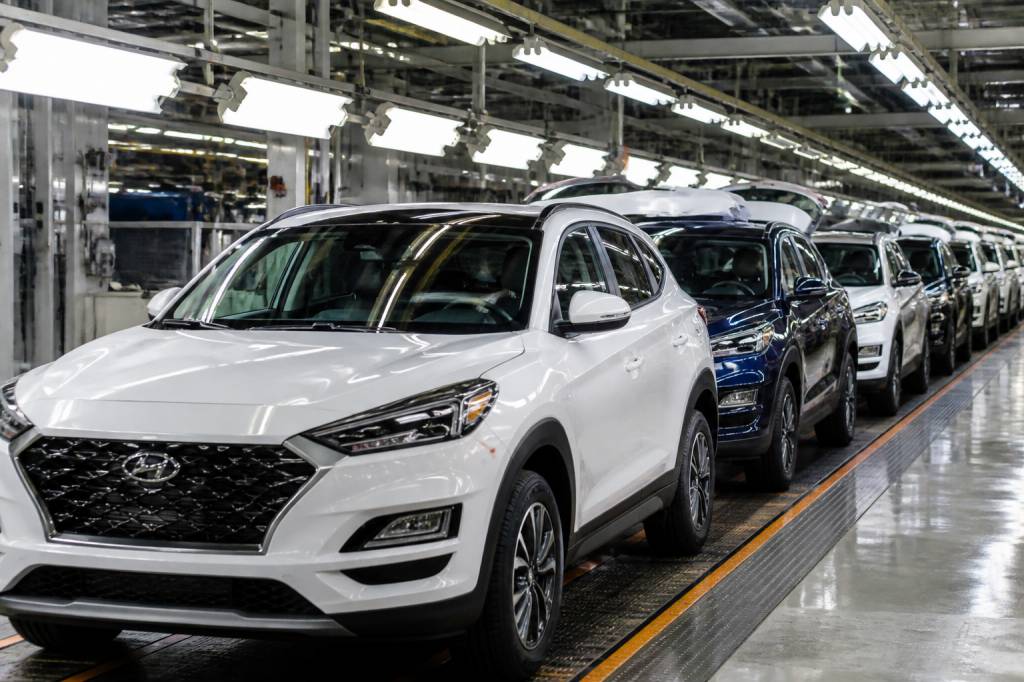
Remember when missing chips could delay a vehicle build for months? That chaos has eased, but supply chains are still an active variable rather than a solved problem. Automakers have made progress in sourcing, logistics, and production planning, yet they’re now dealing with new layers of uncertainty: battery materials, geopolitics, labor costs, and trade policy.
Battery supply remains especially important as electrification expands. Manufacturers are racing to secure critical materials and localize production where possible. That’s not just an environmental story; it’s an industrial strategy. The companies that can control battery inputs and manufacturing footprints will have a clearer path to scale.
Meanwhile, global tensions and tariff risks can still ripple through the market. A pricing move in one region can affect vehicle availability, component sourcing, or investment plans elsewhere. For consumers, this may feel distant. For automakers, it’s just another reminder that a car is never “just a car” in today’s market. It’s a chess piece with wheels.
What to watch next in the US auto market
Looking ahead, the biggest trend is not a single powertrain or one model class dominating everything. It’s the balancing act between affordability, technology, and utility. The brands that succeed will be the ones that understand what buyers actually want, not just what sounds exciting in a press release.
- More hybrid launches across mainstream nameplates
- EVs becoming more price-competitive through incentives and improved battery costs
- Greater emphasis on software reliability and digital features
- Continued strength in SUVs and trucks, especially with strong value propositions
- More pressure on automakers to deliver lower monthly payments
- Rising importance of charging infrastructure and real-world EV usability
The US auto market is maturing, but it’s not slowing down. If anything, it’s getting more interesting. The easy wins are gone. Now the winners will be the brands that can engineer vehicles people want, price them sensibly, and support them with software and service that don’t feel like afterthoughts.
That’s the road ahead: less hype, more execution. And honestly, that’s where the industry does its best driving anyway.