Autonews Nissan updates, model news and industry coverage
Autonews Nissan updates, model news and industry coverage
Nissan’s current pulse: what the latest updates are really saying
If you’ve been following Nissan lately, you know the brand has been doing that very automotive thing where it quietly tightens a few bolts, refreshes a few models, and then suddenly the whole product story looks more deliberate than before. That’s the part that matters. In an industry obsessed with headline-grabbing launches, Nissan’s recent updates are less about fireworks and more about chassis-level strategy: improve the lineup, sharpen the technology, and keep the range relevant in a market that is moving faster than a hot hatch off the line.
And yes, there’s a lot going on. From electrification and software to trim reshuffles and new model timing, Nissan’s news cycle has been busy enough to keep enthusiasts, fleet buyers, and industry watchers all leaning over the same metaphorical hood. Let’s take a closer look at what’s changing, why it matters, and where Nissan seems to be steering the ship next.
The Nissan formula: familiar strengths, updated for a new road
Nissan’s biggest challenge is also its biggest advantage: the brand is widely recognized, globally distributed, and known for a mix of practical cars and enthusiast-friendly names. That means every update has to do two jobs at once. It needs to keep the everyday buyer happy, but it also has to preserve the identity that gives models like the Z, the Leaf, the Rogue, and the Pathfinder their place in the lineup.
The company has clearly been leaning into a more disciplined product cadence. Instead of reinventing every model from the ground up at once, Nissan is refreshing key touchpoints where customers feel the difference most: infotainment, powertrain efficiency, driver assistance, and interior usability. It’s the automotive equivalent of tuning the intake, exhaust, and ECU before you tear down the engine. Not glamorous, but smart.
That approach matters because the market is punishing brands that arrive late to EVs, underdeliver on software, or leave their best-selling SUVs to age out of relevance. Nissan seems intent on avoiding that trap.
Leaf, Ariya, and the electric balancing act
Electric vehicles remain central to Nissan’s future, but the company’s EV story is now more layered than when the original Leaf first became a pioneer. Back then, Nissan was one of the first mainstream brands to make an EV feel normal. Today, normal isn’t enough. The game has changed, and buyers expect range, charging speed, design, and software to all pull in the same direction.
The Ariya has been one of Nissan’s most important modern EVs, not just because it carries the brand’s electric flag, but because it shows where Nissan wants to go in terms of design and cabin experience. The exterior is sleek without looking overstyled, and the interior leans into a cleaner, more lounge-like feel. That’s not a coincidence. It’s the kind of product that tells you Nissan wants to compete on refinement, not only on value.
Meanwhile, the Leaf remains significant for a different reason. It’s a name with real recognition, and in the world of electrification, that kind of brand equity is worth more than a shiny dashboard. The challenge is obvious: the next chapter has to move beyond “first mainstream EV” and into “still relevant in a highly competitive segment.” That means stronger packaging, more usable range, and a clearer value proposition against rivals that now include everything from compact crossovers to aggressively priced Chinese EVs and American tech-forward entrants.
In plain English: Nissan can’t coast on being early anymore. It has to be excellent.
Model news that matters to everyday drivers
Not every Nissan update is aimed at headline hunters or car-spotting enthusiasts. Some of the most important news is the kind that affects the daily commute, the school run, or a long-haul road trip with three bags, one coffee, and a backseat complaint about legroom. That’s where Nissan’s mainstream models continue to do the heavy lifting.
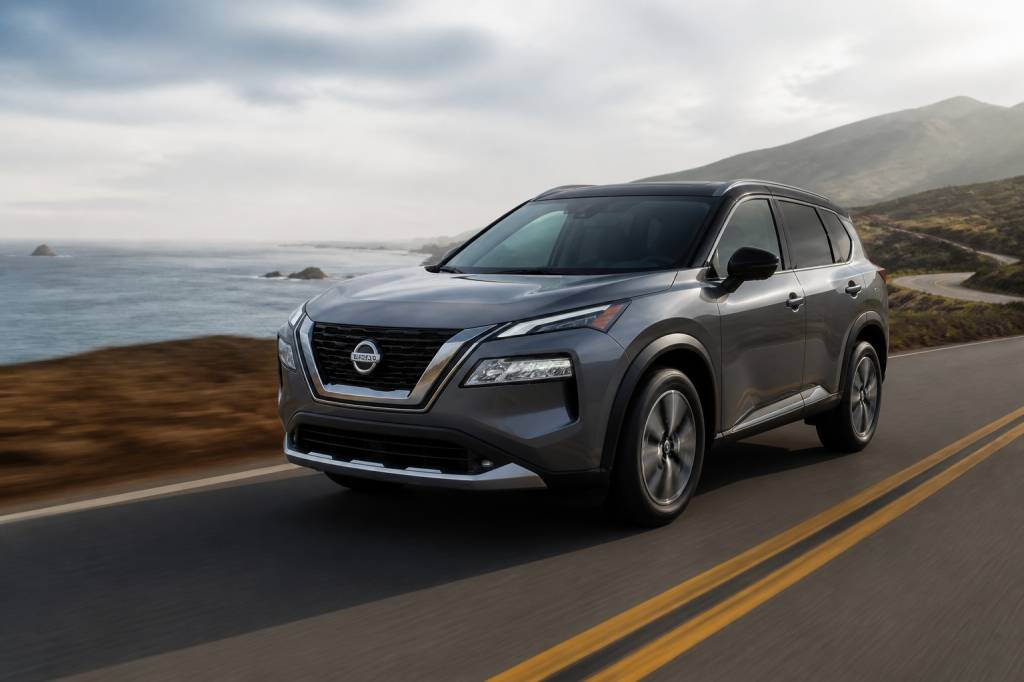
The Rogue, for example, remains one of the brand’s core sales pillars. Buyers in this segment want the same few things over and over: a comfortable ride, good fuel economy, sensible tech, and enough cargo space to swallow life’s chaos. Nissan has been careful to keep the Rogue competitive by updating trim availability, refining infotainment features, and enhancing safety tech. It’s not a dramatic story, but this is exactly how you win in the crossover segment: by making the ownership experience feel easy.
The Pathfinder continues to play a different role. It leans more toward family utility with a stronger sense of road presence. Its recent updates have focused on making the vehicle feel more premium and more capable without losing the practical, three-row mission. That balancing act is trickier than it looks. Too much comfort, and you lose rugged appeal. Too much off-road swagger, and you start compromising the everyday usability that buyers actually pay for.
Then there’s the Altima, a model that often flies under the radar because the sedan market is no longer the main stage. But that’s exactly why updates matter here. Nissan knows that buyers still want a dependable four-door with decent efficiency and modern safety tech. The Altima is part of a shrinking but still meaningful segment, and staying sharp keeps it from becoming a forgotten lane-marker in the market.
The Z: proof that Nissan still remembers how to have fun
Every brand needs a halo car, and Nissan’s Z has been carrying that torch with a satisfying blend of old-school charm and modern performance. In a market where many sports cars are being electrified, downsized, or quietly sidelined, the Z feels refreshingly direct. Twin-turbo V6, rear-wheel drive, manual gearbox available: that’s the kind of spec sheet that still makes enthusiasts sit up straight.
What makes the Z important is not only the performance itself, but the message. Nissan is signaling that it hasn’t forgotten its enthusiast roots. That’s a strategic move as much as an emotional one. Sports cars do not usually move the same volume as crossovers, but they punch above their weight in brand image. They tell the public that the company still cares about driving enjoyment, steering feel, and the kind of character you can’t measure in a spreadsheet.
And let’s be honest: in a world full of touchscreens and beeps, a proper sports coupe with a manual transmission still feels like a small victory for people who think a good redline is more satisfying than a calendar reminder.
What Nissan’s industry moves reveal behind the scenes
The product side is only half the story. To understand Nissan’s recent updates, you also have to look at the broader industry coverage: partnerships, supply chain decisions, manufacturing strategy, and electrification investments. That’s where the real torque is in the story.
Nissan has been navigating an automotive landscape shaped by rising development costs, battery supply pressure, software integration challenges, and shifting consumer demand. The result is a company that has to be highly selective about where it spends its engineering energy. This is why platform sharing, regional adaptation, and phased rollouts are increasingly important. Building every model as a standalone passion project simply doesn’t make financial sense anymore.
At the same time, the company has been keeping a close eye on market segmentation. SUVs and crossovers continue to dominate many regions, but Nissan also knows that model diversity matters. A strong commercial vehicle presence, sensible passenger cars, and a few emotional products can help stabilize the brand against market swings. It’s not just about making a good car. It’s about making the right car in the right region at the right time.
That’s the kind of business logic that often gets lost when people focus only on horsepower figures or a new headlamp signature. Yet it’s exactly what determines whether a model stays on the road, in the showroom, and in the black ink column.
Why Nissan’s interior tech updates deserve more attention
One area where Nissan has been steadily improving is cabin technology. That matters because the modern car is no longer just a machine that moves. It’s a rolling interface, a navigation hub, a family office, and sometimes a second living room. If the software feels clumsy, the whole vehicle feels older than it really is.
Nissan’s newer and refreshed models have been leaning into better screens, more intuitive controls, improved smartphone integration, and a broader set of driver assistance systems. These are not just luxury touches. They directly affect how relaxed, safe, and confident the driver feels every day.
There’s also a growing importance to interface design. A well-placed physical knob can reduce frustration more effectively than a glossy menu full of submenus and hidden tabs. Nissan appears to understand that the best tech is often the tech that disappears into the background. If you need a tutorial every time you want to adjust the climate, the cabin has already missed the mark.
That’s why even modest updates can have a big impact. A cleaner infotainment response, faster menu navigation, improved voice control, and more consistent screen layouts across trims all make the car feel newer, more polished, and more premium than a sticker price alone would suggest.
The market pressure Nissan can’t ignore
Nissan is competing in a market that is brutally efficient at exposing weak spots. Buyers have more options than ever, incentives shift quickly, and competitors are constantly raising the bar. Korean brands are pushing value and tech hard. Japanese rivals are refining reliability and hybrid efficiency. American and European brands are leaning into design and software. And EV newcomers are forcing everyone else to justify their existence one charging session at a time.
That means Nissan’s updates are not just cosmetic. They’re defensive and offensive at the same time. A refreshed model can protect market share. A better powertrain can improve fuel economy and emissions compliance. A smarter cabin can keep a loyal customer from jumping to a competitor. In a segment as crowded as compact SUVs, that’s not an abstract exercise; it’s survival.
This is also why timing matters so much. Launching too early can mean outdated hardware by the time the vehicle reaches showrooms. Launching too late can mean losing momentum to rivals. Nissan appears to be managing this with a more measured approach, spacing out updates and focusing on meaningful changes rather than simply chasing the news cycle.
What to watch next from Nissan
If you’re tracking Nissan’s next moves, a few themes stand out. First, expect continued electrification, but with more emphasis on practical positioning rather than hype alone. Second, look for more refinement in the brand’s core SUVs and crossovers, because that’s where the volume lives. Third, keep an eye on how Nissan balances global platform efficiency with local market needs. That balance could define how competitive the company remains over the next few years.
There’s also the question of identity. Nissan has the tools to be a value leader, a technology follower-turned-competitor, and an enthusiast brand all at once. That’s a difficult three-lane merge, but not impossible. The key is consistency. Buyers will forgive a lot if a brand feels focused and credible. They’ll forgive much less if every model feels like it belongs to a different company.
For now, the recent updates suggest a brand trying to sharpen its edges without losing its accessibility. That’s a promising direction. It may not always be loud, but in the automotive world, the smartest moves often happen below the surface, where the real engineering work lives.
Bottom line for readers watching the Nissan garage
Nissan’s current story is less about one blockbuster launch and more about sustained correction and smart momentum. The electric lineup is evolving, the core SUVs remain essential, the Z keeps the enthusiast flame alive, and the company’s broader business decisions show a brand that understands the cost of getting complacent.
If you’re an owner, shopper, or just a reader who enjoys watching the industry shift gears in real time, Nissan is worth keeping on your radar. The updates may not always arrive with tire smoke and confetti, but they do tell a clear story: this is a brand working to stay relevant, practical, and just sharp enough to remind everyone it still knows how to drive the conversation.