Automotive news Honda: latest models, updates, and industry insights
Automotive news Honda: latest models, updates, and industry insights
Honda has never been the loudest voice in the automotive room, but it has usually been one of the most interesting. While rivals chase every trend at full throttle, the Japanese manufacturer tends to study the road, check the weather and then choose its line. That measured approach is now being tested by the rapid shift toward electrification, software-defined vehicles and increasingly demanding emissions rules.
The latest Honda news points to a company in transition. Hybrid power is becoming a central part of the range, fully electric models are moving from concept stage to production, and familiar nameplates such as the Civic, CR-V and Pilot are being asked to carry more technological weight. At the same time, Honda still wants to preserve the qualities that made its cars popular: efficient engines, practical cabins, approachable pricing and a little driving character.
So, what is happening in the Honda garage? Let’s take a closer look at the brand’s newest models, product updates and the business decisions shaping its next chapter.
Honda’s hybrid strategy moves into the fast lane
For Honda, hybrid technology is not a temporary bridge. It is becoming one of the main pillars of the business. The latest Civic Hybrid and Accord Hybrid demonstrate how the company is using electrification without asking every customer to immediately install a home charger or plan a journey around public charging stations.
The current hybrid system combines a gasoline engine with electric motors and a battery pack. In many driving situations, the electric motor does most of the work, while the engine acts as a generator or joins in when additional power is required. The result is smooth acceleration, strong low-speed response and better fuel economy than a conventional gasoline model.
Behind the wheel, the character is pleasantly different from older hybrids. There is less of the familiar “rubber-band” sensation under acceleration, and the transition between electric and gasoline power is generally discreet. Press the accelerator firmly and the system responds with the quiet confidence of a well-tuned transmission—although it still reminds you that physics, unlike marketing departments, cannot be negotiated with.
Honda expects hybrid vehicles to account for a much larger share of its global sales during the second half of the decade. That strategy gives the company time to improve battery production, charging infrastructure and software while continuing to serve drivers who prefer the convenience of gasoline power.
Civic Hybrid: the compact car refuses to retire quietly
The Honda Civic remains one of the brand’s most important models, and its hybrid return gives the compact car a fresh argument in an increasingly crowded market. Available in sedan and hatchback body styles depending on the market, the Civic Hybrid combines familiar Honda practicality with a more efficient powertrain.
Its appeal is easy to understand. The cabin remains spacious for the class, visibility is strong and the dashboard avoids turning every function into a touchscreen scavenger hunt. Honda has retained physical controls for key features, an increasingly welcome decision for drivers who would rather adjust the climate than negotiate with a digital menu.
The hybrid powertrain also suits the Civic’s daily mission. City traffic becomes quieter and smoother, while highway driving benefits from the additional electric assistance. Fuel economy figures vary by market and trim, but the important point is that the Civic Hybrid does not feel like an economy penalty box. It is still a Civic: compact enough for urban streets, comfortable enough for longer trips and competent when the road begins to twist.
For buyers who want lower fuel consumption without moving into a larger crossover, this could be one of Honda’s smartest launches. The compact sedan may not generate the same headlines as a futuristic electric SUV, but steady sellers often pay the bills while concept cars steal the photographs.
CR-V expands its role with hybrid and plug-in technology
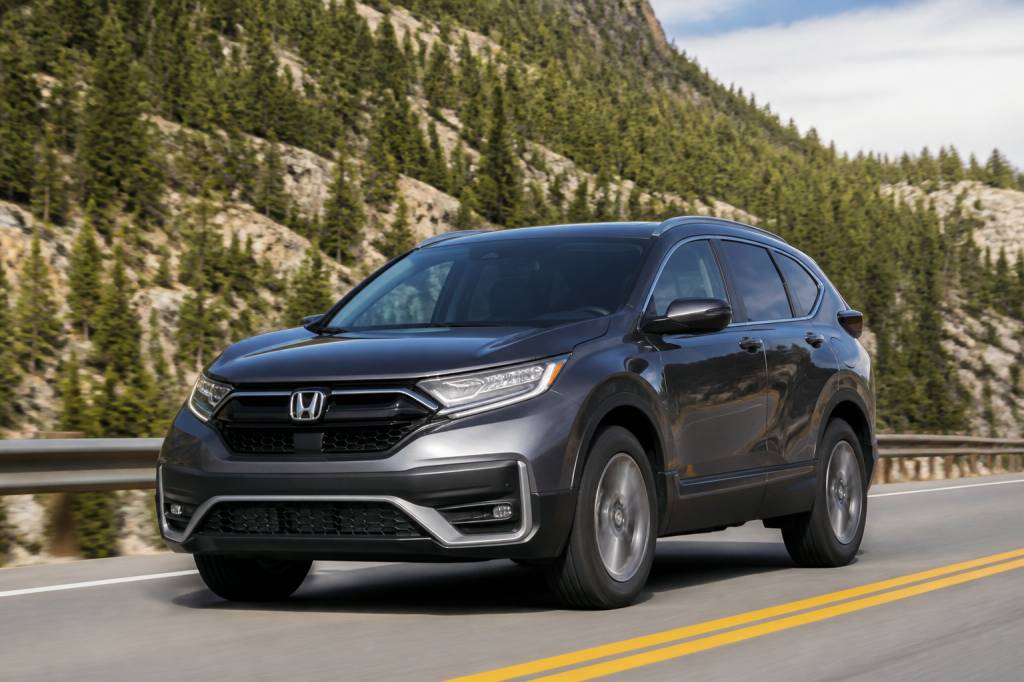
The CR-V has become a global cornerstone for Honda. Its latest generation focuses on space, comfort and electrification, with hybrid versions playing a particularly important role. In North America, the CR-V Hybrid offers a practical alternative to traditional gasoline-powered compact SUVs, while selected international markets receive plug-in hybrid variants.
The plug-in hybrid approach is especially significant in Europe, where the CR-V e:PHEV can cover a useful portion of daily commuting on electric power before switching to gasoline for longer journeys. That flexibility addresses one of the biggest frustrations surrounding full electric vehicles: the need to plan charging during road trips.
Of course, plug-in hybrids work best when owners actually charge them. A vehicle with a cable that never leaves the trunk is essentially carrying extra battery weight for decorative purposes. But for drivers with home charging access and predictable daily routes, the format can deliver quiet electric commuting during the week and long-distance freedom at the weekend.
The CR-V also benefits from a mature interior design. Rear-seat space is generous, luggage capacity is competitive and the driving position offers the elevated view many SUV buyers expect. Honda has not tried to turn the CR-V into a rolling spaceship. Instead, it has concentrated on making the vehicle easier to live with, which is often the more difficult engineering challenge.
Honda Prologue brings a new electric identity
The Honda Prologue represents a major step into the battery-electric market. Developed through Honda’s collaboration with General Motors, the midsize electric SUV is built on GM’s Ultium platform and shares some underlying architecture with other vehicles from that group. Yet Honda has worked to give the Prologue its own design, packaging and driving personality.
Its proportions are clean and contemporary, with a long wheelbase that helps create a spacious cabin. Depending on specification, all-wheel drive is available, while front-wheel-drive versions focus on efficiency and range. Exact range depends on wheel size, drivetrain and market configuration, but the Prologue is designed to compete with established electric SUVs rather than simply serve as a technological experiment.
Inside, Honda emphasizes usability. The cabin includes Google built-in services on compatible versions, smartphone integration and a conventional layout that should be relatively easy for existing Honda customers to understand. The Prologue is not trying to make the driver feel like a beta tester sitting inside a smartphone with wheels.
Its arrival is strategically important beyond sales volume. Honda needs real-world experience with battery-electric customers: how they charge, how they use software, what features they value and where ownership frustrations appear. Every Prologue on the road provides data that can influence the company’s next generation of electric vehicles.
The Prelude returns with a hybrid twist
Few Honda names carry as much emotional baggage as Prelude. The sporty coupe has been absent for years, so its return has attracted attention well beyond the usual product-cycle chatter. Honda has confirmed the new Prelude as a hybrid sports coupe, bringing back a name associated with sleek styling and front-wheel-drive performance.
The new model is expected to sit between the Civic and more specialized performance products in Honda’s lineup. It uses the brand’s two-motor hybrid system, but the engineering focus is not limited to fuel economy. Honda has highlighted a more engaging driving experience, including a revised version of its S+ Shift technology, which simulates gear changes and helps create a more familiar performance-car rhythm.
Purists may ask whether a hybrid coupe can truly inherit the Prelude spirit. That is a fair question. A modern sports car must satisfy stricter safety, emissions and efficiency requirements than its ancestors, and the answer cannot simply be “add more horsepower.” Honda’s opportunity lies in delivering balance: sharp responses, a low driving position, attractive proportions and enough everyday usability to make the car more than a weekend ornament.
The Prelude also sends a useful message about brand identity. Honda is not abandoning enthusiast drivers while it develops electrified vehicles. Sometimes a product can be both sensible and exciting. Much like a good manual gearbox, that balance is difficult to perfect—but deeply rewarding when it works.
Honda 0 Series: the electric future takes shape
Honda’s most ambitious electric plans are gathered under the 0 Series banner. The company presented a family of concept vehicles before revealing production-oriented models, including the Honda 0 Saloon and Honda 0 SUV. These vehicles are intended to arrive in global markets from 2026, beginning in North America.
The design language is deliberately different from today’s Honda lineup. The concepts feature low, aerodynamic bodies, thin lighting elements and spacious interiors made possible by dedicated electric platforms. Honda’s “Thin, Light and Wise” philosophy summarizes the engineering target: reduce unnecessary mass, improve aerodynamic efficiency and use software intelligently rather than simply adding features until the vehicle needs its own instruction manual.
The production 0 Series models will be crucial for Honda because they are being developed as dedicated electric vehicles rather than adaptations of gasoline platforms. A clean-sheet architecture can provide better battery packaging, a flatter floor and more freedom in cabin design. It can also improve efficiency, an area where weight and aerodynamics matter just as much as battery capacity.
Honda has also discussed an advanced operating system and automated driving technologies for the 0 Series. The real test will be turning attractive demonstrations into reliable customer features. Drivers may enjoy futuristic interfaces in a showroom, but they value quick navigation, stable connectivity and software updates that do not interrupt a morning commute.
Manufacturing investment becomes a competitive advantage
Electric vehicles are not only a product challenge; they are a manufacturing challenge. Honda has announced major investments in electric-vehicle and battery production, including projects in Canada involving a full EV supply chain. The goal is to improve control over battery costs, sourcing and production efficiency.
Batteries represent a significant portion of an electric vehicle’s cost. Producing them closer to vehicle assembly plants can reduce logistics complexity and help manufacturers respond more quickly to market changes. It may also support compliance with regional sourcing rules and government incentives, although the economic picture continues to evolve.
Honda has adjusted its electrification plans in response to slower-than-expected EV growth in some markets. That does not mean the company is abandoning electric vehicles. Instead, it reflects a more flexible approach: expand hybrids in the near term, refine battery-electric technology and scale production according to customer demand.
This flexibility is valuable. The automotive industry has learned that the transition will not happen at the same speed everywhere. Urban Europe, suburban North America and rapidly growing Asian markets have different charging networks, fuel prices and regulatory pressures. A single global recipe would be convenient, but the automotive world rarely rewards convenience.
What Honda’s strategy means for buyers
For consumers, Honda’s evolving lineup creates more choice without forcing a single answer. Drivers who want maximum simplicity can still consider gasoline models in markets where they remain available. Those seeking lower fuel consumption have hybrids such as the Civic, Accord and CR-V. Customers ready for battery power can explore the Prologue, while future 0 Series models will target a more advanced electric experience.
There are practical questions worth asking before choosing:
The best powertrain is not necessarily the most technologically impressive one. It is the system that fits your driving pattern. A well-used hybrid can be a smarter purchase than an electric vehicle that spends every weekend searching for a charger. Likewise, an EV can be remarkably convenient when a home charger turns each morning into a full “tank” without a visit to the fuel station.
The road ahead for Honda
Honda’s current product news reveals a company balancing tradition and transformation. The Civic and CR-V continue to provide dependable foundations, hybrids are becoming more sophisticated, the Prelude is bringing back a dose of emotion, and the Prologue opens the door to a larger electric portfolio.
The real challenge will be execution. Honda must control costs, make software dependable, expand charging partnerships and ensure that its electric vehicles feel distinctive rather than interchangeable. It also has to protect the qualities that have built customer loyalty: thoughtful ergonomics, durable engineering and the reassuring sensation that somebody tested the car on an actual road before releasing it.
If Honda can combine that practical discipline with the imagination of its 0 Series program, the next few years could be its most important in decades. The brand may not sprint blindly toward the future, but it is clearly moving—and with hybrids, electric SUVs and a resurrected coupe in the lineup, the road ahead looks anything but dull.