
How China’s Smart Cockpit Technology Is Reshaping the Future of Connected Cars in 2026
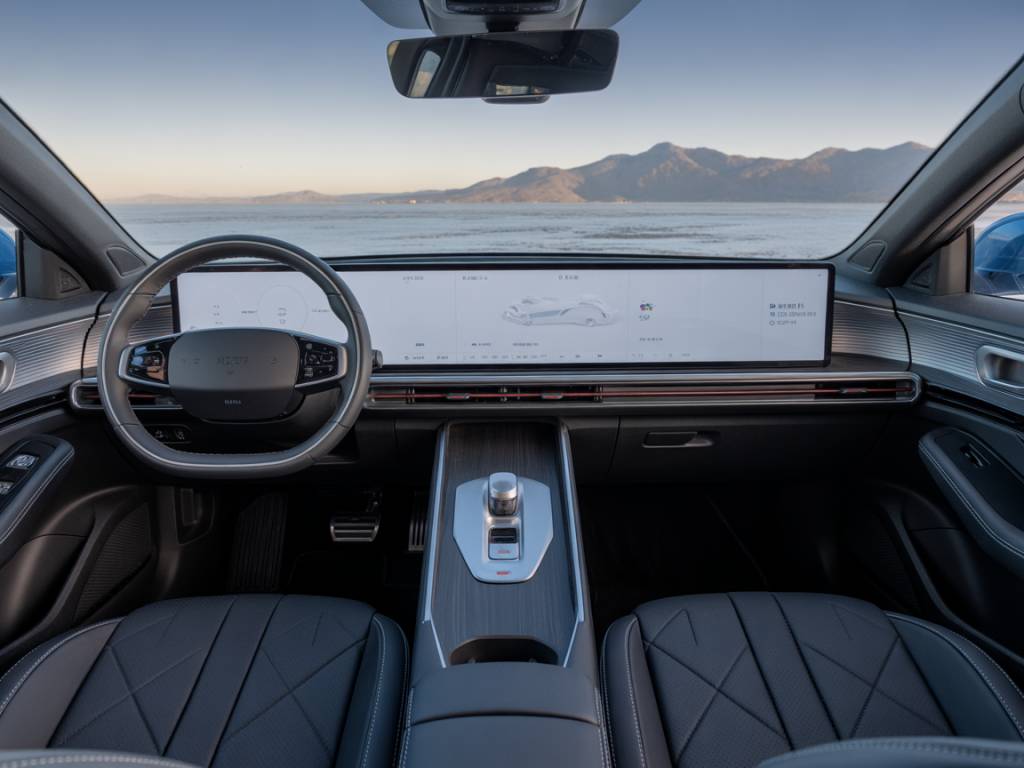
How China’s Smart Cockpit Technology Is Reshaping the Future of Connected Cars in 2026
China’s automotive market has become one of the most influential laboratories for connected car innovation, and in 2026, smart cockpit technology is at the center of that transformation. What began as a premium feature set focused on infotainment and voice control has evolved into a core part of the in-car experience, shaping how drivers interact with navigation, entertainment, vehicle settings, digital services, and even safety functions. For automakers, suppliers, and technology companies, the rise of the smart cockpit in China is no longer just a regional story. It is increasingly a global reference point for the future of connected cars.
At its simplest, a smart cockpit combines advanced digital displays, intelligent voice assistants, cloud connectivity, AI-powered personalization, and software-defined vehicle functions into a unified user experience. But in China, this concept has advanced faster and with more ambition than in many other markets. The result is a highly integrated environment where the cabin itself becomes a digital platform, not merely a place to sit and drive. That shift is influencing vehicle design, consumer expectations, and the competitive landscape for electric vehicles, plug-in hybrids, and premium sedans alike.
The rise of the smart cockpit in China
China’s smart cockpit market has grown rapidly because local consumers have embraced digital-first mobility. Younger buyers in particular expect the same level of responsiveness in a vehicle that they get from their smartphones, tablets, and smart home devices. That means large center screens, rear-seat entertainment systems, advanced AI assistants, multi-device connectivity, and over-the-air software updates are no longer optional extras in many segments. They are becoming baseline expectations.
Several structural factors have accelerated this trend. China’s EV boom created a market where software differentiation matters as much as powertrain performance. Domestic automakers and new-energy vehicle brands have used smart cockpit technology to stand out in a crowded market, while tech companies and chipmakers have helped bring consumer electronics expertise into the cabin. The result is a fast-moving ecosystem where the connected car is designed to evolve continuously after delivery.
Unlike older vehicle architectures that separated infotainment from vehicle control, modern Chinese smart cockpits increasingly merge the two. Climate control, navigation, energy management, drive modes, cabin ambiance, and even driver assistance settings can be managed through one software layer. This integrated approach is one reason the smart cockpit has become such a defining feature of the next generation of connected cars in China.
What defines a modern smart cockpit in 2026
By 2026, the smart cockpit is not just about screens. It is about computing power, sensor fusion, voice intelligence, and seamless interaction. The best systems combine multiple technologies to create a more natural and personalized driving environment.
These features create a cabin experience that feels more like a smart device ecosystem than a traditional automobile interior. In many Chinese vehicles, the interface is designed around frequent interaction rather than rare use. Drivers can ask the system to adjust the cabin temperature, locate the nearest charging station, recommend a restaurant, or change the navigation route using natural language. That convenience is central to the appeal of connected cars in China.
Why Chinese automakers are moving so fast
Chinese automakers have a strong incentive to innovate quickly because the local market is highly competitive and technology-led. Many brands are competing on user experience rather than only on engine output or badge prestige. In this environment, the smart cockpit becomes a visible and valuable differentiator. It is one of the first things buyers notice in a showroom and one of the most frequently used parts of the car after purchase.
Another reason for rapid development is the close relationship between the automotive and consumer electronics sectors in China. Hardware suppliers, software developers, AI firms, and semiconductor companies often collaborate directly with automakers, shortening product cycles. This has made it possible to integrate features like large-language-model voice assistants, intelligent route planning, personalized media profiles, and intelligent cabin controls faster than in more traditional automotive markets.
Many Chinese electric vehicle brands also use their vehicles as software platforms. That means smart cockpit development does not stop at launch. Companies can add subscription features, improve user interfaces, introduce new apps, and update in-car digital services long after the vehicle leaves the factory. For consumers, this makes ownership feel dynamic. For automakers, it creates recurring revenue opportunities and stronger customer engagement.
The role of artificial intelligence and voice interaction
Artificial intelligence is one of the most important forces reshaping smart cockpit technology in 2026. In China, AI-powered voice assistants have become far more capable than earlier systems that only recognized basic commands. Today’s assistants can handle more conversational interactions, remember preferences, and respond to contextual requests. A driver can ask for the nearest fast charger, then refine the request by price, distance, or brand compatibility without restarting the command.
This matters because voice control reduces friction. It allows drivers to keep their hands on the wheel and their eyes on the road while still managing complex digital functions. In dense urban traffic, where attention is constantly divided, this is more than a convenience. It is a usability and safety advantage.
AI also powers personalization. Smart cockpits can identify different drivers through profiles linked to keys, phones, or facial recognition systems. Once recognized, the vehicle can restore seat position, mirror angles, climate preferences, music settings, navigation history, and even cabin lighting themes. For families and shared vehicle users, this type of seamless personalization has become a key selling point.
Connected cars and the software-defined cabin
The connected car in China is increasingly becoming a software-defined product, and the smart cockpit is one of its most visible expressions. Rather than being fixed at the time of manufacture, the cabin interface is now expected to evolve. This changes the business model for automakers and suppliers as well as the customer experience.
Software-defined cockpit systems allow manufacturers to improve responsiveness, add apps, refine layouts, and introduce new functions without requiring a dealership visit. For example, a vehicle might receive a better navigation interface, more accurate voice recognition, or expanded multimedia options via an over-the-air update. In some cases, brands can also enable premium features after purchase through digital subscriptions or bundled service packages.
This approach also helps automakers respond more quickly to consumer feedback. If users complain about menu complexity, lag, or poor voice recognition, software can often be updated faster than hardware can be redesigned. In a market as fast-moving as China, that agility is a major advantage.
How smart cockpit technology is influencing global auto design
Although the strongest momentum is in China, the influence of smart cockpit technology is spreading well beyond the domestic market. Global automakers now study Chinese user interfaces, voice systems, and in-car digital ecosystems closely because they reveal what many consumers will expect in the coming years. Features that were once considered advanced in China are increasingly becoming benchmarks for connected cars worldwide.
Western automakers have already begun borrowing ideas from the Chinese market, including larger screens, more integrated user interfaces, faster startup times, and richer app ecosystems. Suppliers are also adapting. Semiconductor companies, display makers, and software firms are investing in platforms that can serve both Chinese and international vehicle programs.
For buyers in the United States and Europe, this means the influence of China’s smart cockpit technology may appear in future models through more advanced infotainment systems, smarter assistant tools, better connectivity, and more personalized cabin experiences. Even if regulations, consumer habits, and brand preferences differ by region, the broader direction is clear: the cabin is becoming a central competitive battleground.
Challenges that remain in 2026
Despite the progress, smart cockpit technology in China still faces challenges. One concern is complexity. As systems become more capable, they can also become harder to use if interfaces are poorly designed. Too many menus, too many alerts, or overly aggressive feature layering can overwhelm drivers rather than help them.
Data privacy and cybersecurity are also major issues. Connected cars collect large amounts of information, including location data, user preferences, driving behavior, and cabin monitoring inputs. Protecting that data is essential, especially as vehicles become more deeply connected to cloud platforms and mobile apps. Consumers are becoming more aware of how their data is used, and automakers must build trust through clear policies and strong technical safeguards.
Another challenge is balancing digital richness with distraction reduction. As smart cockpits add more entertainment, more personalization, and more options, designers must ensure the experience remains intuitive and safe. The most successful systems in 2026 are those that simplify the driving experience rather than clutter it.
What buyers should look for in a smart cockpit vehicle
For consumers shopping for a connected car, smart cockpit features can be a major differentiator. Buyers should pay attention not only to screen size or visual design, but also to the quality of software and interaction. A beautiful interface is less valuable if it is slow, confusing, or poorly integrated with the rest of the vehicle.
Consumers interested in electric vehicles should also look at how the cockpit integrates charging information, battery status, trip planning, and energy management. In many Chinese EVs, these functions are tightly woven into the digital experience, making long-distance travel and daily commuting more efficient.
China’s smart cockpit technology is reshaping the future of connected cars in 2026 by making the interior of the vehicle as important as the drivetrain. Through AI, connectivity, software updates, and deep personalization, the cockpit has become a living digital environment that continues to evolve after purchase. As these systems mature, they are setting new expectations for convenience, safety, and user experience across the global automotive industry.
For automakers, the message is clear: the next wave of competition will not be won by hardware alone. The vehicles that stand out will be those that turn the cabin into a truly intelligent, connected, and adaptable space.