Automotive news: the latest trends, models, and industry updates
Automotive news: the latest trends, models, and industry updates
If you’ve been keeping one eye on the rearview mirror and the other on the road ahead, you’ve probably noticed that the automotive world is moving fast enough to make a twin-turbo engine blush. New models are arriving with sharper design, smarter software, and powertrains that are increasingly less about brute force alone and more about efficiency, connectivity, and versatility. The result? A car market that feels a bit like a pit lane before the lights go green: crowded, noisy, and full of strategic surprises.
What’s especially interesting right now is that automotive news is no longer just about horsepower figures and 0-60 times. Sure, those still matter to the enthusiasts among us. But the bigger story is how manufacturers are balancing electrification, affordability, regulations, and consumer demand while trying to keep their identity intact. In other words, the industry is navigating a corner at high speed, and not every brand is taking the same line.
Electric vehicles are still the headline act, but the plot has changed
For the past few years, EVs have dominated the conversation like a flagship model at a motor show. That hasn’t changed, but the tone has. The early hype phase gave way to a more practical question: how do carmakers make electric vehicles desirable, profitable, and usable for a broader audience?
The answer is not as simple as “add a bigger battery.” Buyers are now looking at charging speed, real-world range, cabin quality, software reliability, and whether the price makes sense once the novelty wears off. As a result, many brands are shifting toward a more balanced strategy. Instead of chasing maximum range at any cost, they’re focusing on packaging, efficiency, and user experience.
One of the clearest trends is the rise of more accessible EVs. A few years ago, electric driving still felt like a premium experiment for early adopters. Today, more compact crossovers, city cars, and entry-level sedans are entering the market with prices that, while not exactly pocket change, are increasingly competitive. That matters because the mass market doesn’t buy trends; it buys value.
Meanwhile, charging infrastructure continues to shape consumer confidence. Even the best electric car can feel a little less inspiring if the nearest fast charger is two towns away and occupied by a driver who has settled in like they’re waiting for a train. The brands that understand this are the ones building not just cars, but ecosystems.
- Faster charging times are becoming a major selling point
- More affordable EVs are expanding the market beyond early adopters
- Software updates are increasingly used to improve performance after purchase
- Charging networks remain one of the biggest factors in buyer confidence
Hybrid powertrains are having a very smart moment
If EVs are the headline act, hybrids are the clever supporting band stealing the show. Across many markets, they’ve become the bridge between traditional combustion and full electrification. And frankly, that bridge is getting a lot of traffic.
Why? Because hybrids offer a compelling compromise. They reduce fuel consumption, soften the transition for drivers not ready to go fully electric, and often avoid the range anxiety that still hangs over some EV shoppers like a storm cloud over a test drive. Plug-in hybrids, in particular, are proving useful for drivers who can charge at home but still want the flexibility of gasoline for longer trips.
Automakers are also using hybrid systems to extract more efficiency from their existing platforms. That’s not just engineering thriftiness; it’s business strategy. Developing entirely new EV architectures takes time and money, while refining a hybrid lineup can keep sales flowing during the transition. Think of it as making the most of the tools already in the garage before buying a whole new workshop.
This hybrid surge is especially visible in SUVs and family vehicles, where buyers want practicality without feeling like they’ve sacrificed driving range or convenience. The market is sending a clear signal: not every customer wants to plug in every single day, and not every journey needs a battery the size of a small apartment building.
New models are getting smarter, sharper, and more purpose-driven
One thing that stands out in recent model launches is how much more focused manufacturers have become. The days of simply stretching a platform and adding chrome are fading. Today’s new models tend to arrive with a much clearer identity, whether that’s rugged utility, premium comfort, sporty dynamics, or digital-first convenience.
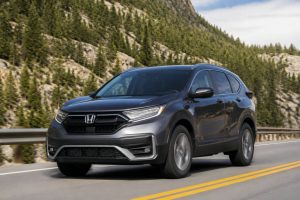
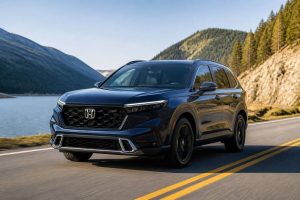
Take the current wave of compact SUVs and crossover-based models. They’re not just chasing trends; they’re responding to how people actually use their vehicles. Buyers want a car that can handle the weekday commute, the weekend road trip, and the occasional furniture run without looking like a rolling compromise. So automakers are delivering better interiors, more flexible seating, improved infotainment systems, and more efficient engines or electric drivetrains.
At the premium end, design is becoming more adventurous. Lighting signatures are more distinctive, grilles are either dramatically oversized or cleverly reimagined, and cabins increasingly resemble tech lounges on wheels. Whether that’s progress or style over substance depends on the badge and the buyer, but there’s no denying the market is moving toward stronger visual identities.
Meanwhile, performance models are still alive and well, though often with a new twist. Even when they remain powered by internal combustion, they are frequently electrified in some form. The old-school roar may be slightly muted in some cases, but the torque is often more immediate and the acceleration more ruthless. In a straight line, many of these machines are less “listen to the engine” and more “hold on and read the speed limit later.”
Software is becoming as important as horsepower
Here’s where the modern car really changes gear. Software is no longer a side feature; it’s becoming central to how a vehicle performs, feels, and evolves over time. In many new models, the digital layer affects everything from driver assistance to energy management to the layout of the dashboard.
This trend is pushing automakers to think more like tech companies. Over-the-air updates can add features, refine interfaces, and fix bugs without requiring a dealership visit. That sounds brilliant, and often it is. But it also means customer expectations are rising. If a phone can update seamlessly overnight, people start wondering why their car’s menu system still feels like it was designed on a Thursday afternoon in 2014.
Advanced driver assistance systems are also becoming more sophisticated. Lane centering, adaptive cruise control, traffic jam assist, and automated parking features are increasingly common across a wider range of vehicles. The best systems reduce fatigue and make driving easier. The less polished ones can feel a bit like a nervous co-driver who keeps reaching for the wheel at the wrong moment.
For buyers, this means evaluating a car now requires looking beyond the spec sheet. It’s not only about engine output or battery capacity; it’s about how intuitive the interface is, how often the software improves, and whether the vehicle’s technology feels robust after six months, not just impressive during a dealer demo.
Industry updates: prices, supply, and strategy still matter
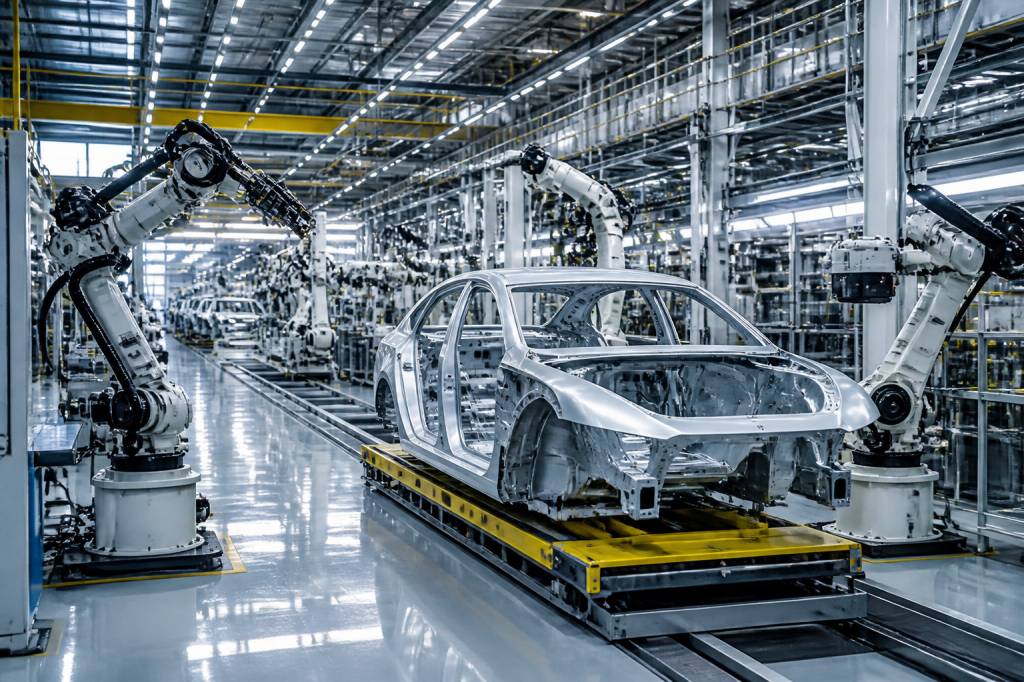
It’s easy to get caught up in the excitement of new launches, but the business side of automotive news is where many of the biggest shifts are happening. Manufacturing costs, battery supply chains, trade policies, and interest rates all influence what reaches the showroom floor and at what price.
One major theme is profitability. Automakers are under pressure to invest heavily in new technology while maintaining margins. That’s a difficult balancing act, especially when consumers are becoming more price-sensitive. In response, some brands are simplifying lineups, reducing the number of niche variants, and focusing on core models that sell in volume. Translation: fewer oddball trims, more strategic product planning.
Supply chain stabilization has helped compared with the chaos of recent years, but it hasn’t solved everything. Semiconductor availability, battery material sourcing, and logistics remain important factors. For consumers, the practical effect can be seen in production delays, package changes, or feature adjustments depending on the market.
Regulatory pressure also continues to influence the direction of travel. Emissions standards, safety requirements, and regional policies are pushing manufacturers toward cleaner and safer vehicles, but not always at the same pace in every country. That’s why the same model can arrive with different powertrains, different equipment, or even a slightly different name depending on where you live. Global carmaking is rarely one-size-fits-all; it’s more like tailoring a suit for multiple drivers, all of whom have different opinions and budgets.
- Manufacturers are prioritizing profitable core models over niche variants
- Battery sourcing and semiconductor supply still affect production timelines
- Regional regulations are shaping different versions of the same car
- Pricing pressure is forcing brands to be more disciplined with technology investments
The SUV and crossover wave is not slowing down anytime soon
Let’s be honest: if the global auto market had a favorite genre, it would probably be the SUV. Crossovers continue to dominate sales in many regions because they hit the sweet spot for space, driving position, versatility, and perceived safety. They also give manufacturers room to offer multiple trims, powertrains, and technology levels without completely reinventing the vehicle each time.
What’s changing is the segment’s maturity. Early crossovers were often just raised hatchbacks with a slightly more confident stance. Now, they’re being engineered with real attention to handling, efficiency, and interior quality. Some are even beginning to drive like they know they’re expected to carry the family, the luggage, and the reputation of the brand all at once.
At the same time, there’s growing attention on size and efficiency. Urban buyers want vehicles that are easier to park, easier to charge, and easier on the wallet. That has opened the door for smaller crossovers and compact EVs that offer SUV styling without feeling like they need their own zip code.
What buyers should watch next
If you’re shopping for a car right now, or just following the market with a healthy dose of curiosity, there are a few things worth watching closely. The next wave of news will likely revolve around affordability, charging convenience, and how seamlessly new tech is integrated into everyday driving.
Expect more hybrid options, more compact EVs, and more focus on software quality. Also expect manufacturers to talk a lot about “customer-centric” design, which is industry language for “we’ve realized people like buttons, not just touchscreens.” The winners in the coming cycle will probably be the brands that combine sensible pricing with real-world usability and a clear identity.
That last point matters more than it seems. In a crowded market, a car has to do more than look good in a press photo. It has to make sense in traffic, on the motorway, in a parking lot, and in the ownership experience after the novelty has faded. The brands that remember that are the ones most likely to stay in the fast lane.
- Affordable EVs and hybrids will remain central to market growth
- Software reliability will matter more than flashy feature lists
- Buyers will keep demanding more value for money
- Model identity and design originality will help brands stand out
The road ahead looks busy, but promising
The automotive industry is in one of its most interesting phases in decades. Electrification is reshaping the market, hybrids are proving their worth, software is redefining what a car can do, and consumer expectations are becoming more demanding by the day. That’s a lot of pressure, but it’s also a recipe for innovation.
For enthusiasts, this is a fascinating time to watch. For buyers, it means more choice, better efficiency, and smarter vehicles than ever before. And for manufacturers, it means every launch, every update, and every pricing decision carries real weight. No one gets to coast on nostalgia anymore.
So whether you’re tracking the latest model reveal, comparing powertrain strategies, or just wondering which brand is setting the pace, one thing is clear: automotive news has become a lot more than a list of new cars. It’s a live readout of where technology, economics, and driving culture are heading next. And if the industry keeps shifting at this pace, the next few years should be anything but boring.