Automotive dealer groups: how they are reshaping the U.S. car market

Automotive dealer groups: how they are reshaping the U.S. car market
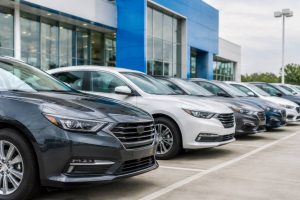
Walk into a modern American dealership group and you may notice something different. The showroom is brighter, the website is smoother, and the person answering your questions might have access to inventory spread across several states. Behind the scenes, the traditional local dealer is increasingly being replaced—or at least supported—by a much larger machine: the automotive dealer group.
These companies operate multiple dealerships, brands, service centers, finance departments, and online sales platforms under one corporate umbrella. Names such as AutoNation, Lithia & Driveway, Group 1 Automotive, Penske Automotive Group, Asbury Automotive Group, and privately held regional groups have become influential players in the U.S. car market.
The change is not merely about buying more dealerships. Dealer groups are reshaping how vehicles are priced, marketed, financed, serviced, and even delivered. In other words, the American car-buying experience is getting a corporate tune-up—and the results are a mixture of efficiency, convenience, and fresh concerns about competition.
From Main Street Lots to National Networks
For decades, the American dealership was usually a local business. A family might own a Chevrolet store, a Ford franchise, or a small collection of dealerships in one city. The dealer knew the community, sponsored the local baseball team, and probably had a favorite sales route for every test drive.
That model has not disappeared, but it is sharing the road with much larger organizations. Dealer groups have expanded by acquiring individual dealerships and regional networks. Once purchased, these stores often retain their brand identity and physical location while gaining access to centralized technology, purchasing systems, marketing teams, and management expertise.
The strategy is straightforward: scale creates leverage. A company operating 100 dealerships can negotiate differently with technology providers, lenders, advertising agencies, and vehicle manufacturers than a single-store operator can. It can also spread administrative costs across a much larger business.
This does not mean every dealership suddenly feels identical. A Toyota store in Texas will still face different customers and inventory needs than a Lexus store in New Jersey. However, decisions about data, staffing, online sales, and customer retention are increasingly influenced by a corporate headquarters rather than only by the local general manager.
Why Dealer Groups Are Growing So Quickly
Several forces are pushing consolidation across the U.S. automotive retail sector.
- Higher operating complexity: Dealers now manage online shopping tools, digital advertising, cybersecurity, vehicle tracking, financing compliance, and customer data. Larger organizations can afford specialized teams.
- Pressure on profit margins: New vehicle margins can fluctuate sharply with supply and demand. Dealer groups use used vehicles, parts, service, and finance operations to balance the business.
- Expensive technology: A competitive digital retail platform requires serious investment. Centralized systems can reduce the cost per dealership.
- Owner succession: Some family-owned dealerships are being sold because the next generation does not want to run the business or cannot finance an expansion.
- Manufacturer expectations: Automakers increasingly demand modern facilities, electric vehicle preparation, and improved customer experiences. Those upgrades can be easier for a large group to fund.
The result is a market where scale has become a form of horsepower. It may not make a dealer group faster in a straight line, but it can help the company navigate potholes that would seriously damage a smaller operation.
The New Economics of the Dealership
Many consumers focus on the price of a new car, but dealerships earn money from several different departments. Vehicle sales are only one part of the equation. Finance and insurance products, used cars, maintenance, collision repair, parts, warranties, and manufacturer incentives all contribute to the final business result.
Dealer groups are particularly strong at connecting these revenue streams. A customer who buys a vehicle in one location may be invited to service it at another store closer to home. A used vehicle traded in at a Honda dealership can be transported to a different location where demand is stronger. A centralized finance department can compare lending options across a wider network.
Inventory sharing is especially important. Before large dealer groups became common, a customer might leave a dealership after hearing, “We do not have that trim in stock.” Today, a salesperson can search vehicles across a regional or national network and arrange a transfer.
That convenience is not free, of course. Transportation costs, preparation fees, and market-based pricing may be reflected in the transaction. Still, the ability to move inventory quickly gives large groups a significant advantage when demand changes. A vehicle that sits quietly on one lot can become a hot commodity two states away.
Pricing Has Become More Transparent—and More Dynamic
Online shopping has changed the psychology of car buying. Customers can compare thousands of listings before entering a showroom, while dealers can monitor prices in real time. Dealer groups have invested heavily in pricing software that studies regional demand, vehicle age, mileage, equipment, and competitor listings.
This has created a more dynamic market. The price of a used SUV may change several times in a week depending on supply and demand. Electric vehicles, which experienced intense interest followed by more uneven demand in some segments, provide a clear example of how quickly pricing can move.
For shoppers, the benefits are obvious. More information makes it easier to identify an overpriced vehicle and compare similar models. Large dealer groups often publish detailed listings, vehicle history reports, payment estimates, and online trade-in tools.
But transparency has limits. The advertised price may not include taxes, registration, dealer-installed accessories, protection packages, or financing conditions. A polished website can make the process feel simple while the final paperwork remains as dense as a service manual.
The best approach is to ask for an itemized out-the-door price. That number—not the monthly payment displayed in large, friendly font—is the figure that truly matters.
Digital Retail Is Changing the Showroom
Dealer groups have become important investors in digital retail. Customers can now complete much of the buying process from a sofa, a kitchen table, or the passenger seat of a parked car—hopefully not while the vehicle is moving.
Common tools include:
- Online vehicle searches covering multiple dealerships.
- Instant trade-in valuation estimates.
- Credit applications and payment calculators.
- Remote document signing.
- Home delivery or pickup scheduling.
- Digital service appointment booking.
- Video walkarounds and virtual consultations.
This does not mean the physical dealership is obsolete. Many buyers still want to sit in a vehicle, test the brakes, compare cargo space, and hear how the engine sounds under acceleration. The showroom is evolving rather than disappearing.
Dealer groups are building an omnichannel experience: customers can begin online, visit a store, return to the website, and finish the purchase through a combination of digital and in-person steps. The smoother the transition, the less the process feels like repeating the same information to three different employees.
That convenience also gives dealer groups access to valuable customer data. Search behavior, preferred models, trade-in timing, service history, and financing activity can all help a company target future offers. For consumers, this raises an important question: how much personalization is useful, and when does it become automotive surveillance?
Used Cars and Service: The Quiet Profit Centers
New vehicle sales attract attention, but used cars and service departments often provide more consistent financial performance. Dealer groups understand this well and are expanding their certified pre-owned programs, reconditioning centers, and standalone used vehicle operations.
Large groups can acquire vehicles from auctions, trade-ins, lease returns, and other dealerships. They can then direct each vehicle toward the market where it is most likely to sell. A compact hybrid may be more valuable in an urban region, while a large pickup could command stronger demand in a rural market.
Centralized reconditioning is another advantage. Mechanical inspections, cosmetic repairs, detailing, and photography can be organized through dedicated facilities. Faster preparation means vehicles spend less time waiting and more time generating revenue.
Service operations are equally important. Modern vehicles are increasingly complex, combining software, sensors, driver-assistance systems, hybrid powertrains, and high-voltage batteries. Independent repair shops remain vital, but dealer service centers have direct access to manufacturer diagnostic tools and technical updates.
For dealer groups, service also creates recurring contact. A vehicle purchase may happen once every few years, but oil changes, tire replacements, software updates, recalls, and warranty work bring customers back regularly. In the automotive business, loyalty is often built one maintenance appointment at a time.
Electric Vehicles Add a New Layer of Complexity
The transition toward electric vehicles is forcing dealer groups to rethink their investments. EVs require different technician training, charging infrastructure, battery-handling procedures, and customer education. A dealership cannot simply place an electric crossover beside a gasoline model and expect the transformation to happen by magic.
Manufacturers have introduced facility standards for EV sales and service, although the pace and requirements vary by brand. Dealer groups with strong access to capital may be better positioned to install chargers, renovate service bays, and train employees.
They can also use scale to test different retail strategies. One store may specialize in EV education, another may focus on fleet customers, and a third may develop battery service capabilities. Lessons learned in one location can then be applied across the network.
However, EV demand has not followed a perfectly smooth curve. Interest rates, charging availability, incentives, vehicle pricing, and consumer concerns about range all influence adoption. Dealer groups must avoid overcommitting to inventory that could lose value quickly. In this part of the market, the smartest strategy may be less about stepping on the accelerator and more about reading the road ahead.
What Consolidation Means for Consumers
There are genuine advantages to a more consolidated dealer landscape.
- Customers may have access to a larger inventory selection.
- Online tools can reduce time spent negotiating and completing paperwork.
- Dealer groups can offer broader service coverage and standardized processes.
- Vehicle transfers make it easier to locate specific colors, trims, and equipment.
- Large organizations may have the resources to invest in EVs and advanced technology.
Yet consolidation can also create friction. When fewer companies control more dealerships in a region, local competition may weaken. Two stores displaying different manufacturer logos may ultimately belong to the same corporate group. That does not automatically mean prices will be identical, but it can reduce the number of truly independent negotiating positions.
Customers may also encounter more standardized sales scripts, centralized call centers, and corporate policies. The friendly local dealer who could make a quick decision might be replaced by a process that requires approval from a distant office.
Data privacy is another issue. Dealer groups hold extensive information about customers’ vehicles, finances, service history, and online behavior. Strong cybersecurity and clear communication about data usage are no longer optional extras. They are part of the ownership experience.
The Regulatory Road Ahead
Dealer consolidation attracts attention from regulators because it affects competition, pricing, and access to automotive services. State franchise laws already shape the relationship between automakers and dealers, while federal and state authorities continue to examine how large companies operate in local markets.
Regulators may ask whether a dealer group has excessive influence over vehicle pricing, service availability, or customer data. They may also scrutinize acquisitions that reduce competition in a particular metropolitan area.
The debate is complicated because size can produce efficiencies. A larger group may genuinely deliver better technology and broader inventory. At the same time, efficiency should not become a synonym for “fewer choices.” The healthiest market needs both capable large operators and competitive independent businesses.
How Buyers Can Navigate the New Market
Consumers do not need a corporate strategy degree to shop effectively, but preparation matters more than ever.
- Research the dealership’s ownership group before visiting.
- Compare the vehicle with listings from competing groups and private sellers.
- Request the complete out-the-door price in writing.
- Separate the vehicle price, trade-in value, financing, and optional products.
- Check whether dealer-installed accessories are mandatory or negotiable.
- Review the cancellation terms for warranties and protection plans.
- Ask where the vehicle can be serviced and whether appointments are centralized.
- Read the privacy policy for online applications and digital retail tools.
It is also worth remembering that a large dealer group is not automatically a bad dealer, just as a small store is not automatically a good one. Reviews, transparency, service quality, and the clarity of the paperwork matter more than the size of the logo on the building.
A Market Built for Scale, But Still Driven by Trust
Automotive dealer groups are becoming central to the American car market because they combine capital, data, technology, and geographic reach. They are influencing everything from inventory allocation to EV preparation and from used-car pricing to service retention.
Their rise reflects the broader transformation of the auto industry. Cars are more digital, customers are more informed, manufacturers are demanding costly upgrades, and the sales process increasingly begins online. In that environment, scale is a powerful engine.
But the customer experience still comes down to fundamentals: a fair price, accurate information, competent service, and respect for the buyer’s time. Whether the dealership is family-owned or part of a national network, those qualities remain the real test drive.
The American dealership is not disappearing. It is becoming more connected, more data-driven, and more corporate. For shoppers, that means more tools and potentially more convenience—but also a greater need to read the fine print, compare offers, and keep both hands firmly on the wheel.