


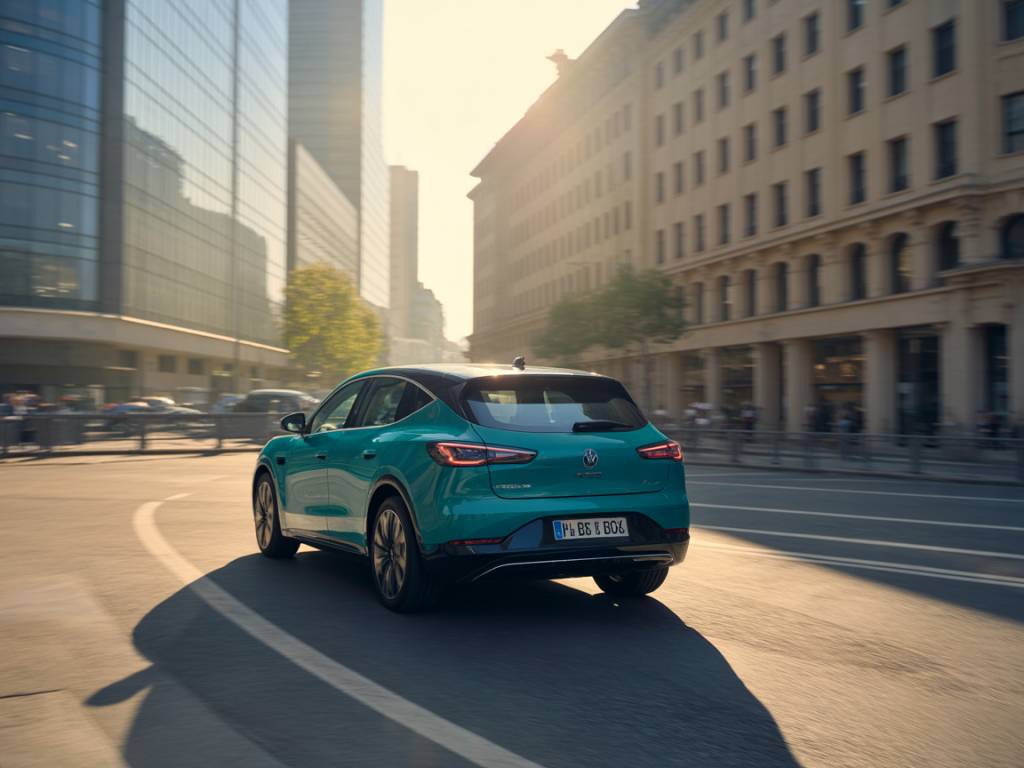
European tariffs on Chinese electric vehicles: a turning point for the EV market
The European Union’s new tariffs on Chinese electric vehicles are set to become one of the most significant disruptions in the global automotive industry of the decade. These tariffs, justified by Brussels as a response to alleged state subsidies and unfair competition, will directly impact the price positioning of brands like BYD, SAIC (owner of MG), NIO, Xpeng and others in Europe. At the same time, they could offer a strategic window for European automakers such as Volkswagen, Stellantis, Renault, BMW and Mercedes-Benz to regain ground in the fast-growing electric vehicle (EV) segment.
For buyers and industry observers, these new European taxes on Chinese EVs raise several questions: Will prices go up? Which brands will adapt fastest? Will local manufacturers be able to seize the opportunity to accelerate their own electric transition? Understanding these dynamics is key for anyone considering buying an electric car in the coming years or following the evolution of global EV competition.
What the new European tariffs on Chinese EVs actually mean
The core of the European policy is the introduction or increase of anti-subsidy tariffs on fully electric vehicles imported from China. These tariffs come on top of the standard import duties already applied, raising the total effective tax burden on affected models.
Although the exact percentage can vary by manufacturer and case, the logic is clear: the EU argues that Chinese EV makers benefit from massive state subsidies, allowing them to export electric cars at prices that European brands cannot match while maintaining profit margins. The European Commission wants to “level the playing field” by making imported Chinese EVs more expensive and therefore less aggressively priced in European showrooms.
In practice, that means:
- Higher import costs for Chinese-built electric vehicles entering the EU market.
- Pressure on Chinese brands either to absorb part of the tariff in their margins or raise retail prices.
- A potential shift in sourcing and production strategies, with Chinese brands exploring European manufacturing to bypass import duties.
Why Chinese EVs became so competitive in Europe
Before examining how the new taxes will change the landscape, it is important to understand why Chinese electric vehicles became so disruptive in Europe in the first place. Over the past five years, Chinese automakers have turned from niche players into serious competitors, driven by a combination of factors:
- Cost leadership: Thanks to large-scale battery production, vertical integration and lower manufacturing costs, Chinese EVs often undercut equivalent European models on price.
- Technology and features: Many Chinese electric SUVs and compact EVs offer long range, fast charging and advanced infotainment at price levels that are attractive to cost-conscious European buyers.
- Aggressive pricing strategies: Brands like MG (backed by SAIC) and BYD have positioned themselves as “value” EV players, directly challenging mainstream models from Volkswagen, Renault or Peugeot.
- Fast time-to-market: Chinese EV makers have shown impressive speed in launching new models and updating software, appealing to early adopters and tech-savvy drivers.
This momentum allowed Chinese automakers to quickly gain market share in key European EV markets such as Germany, France, the Netherlands and the Nordic countries. It also created anxiety among traditional carmakers still investing heavily in electrification while trying to protect profitability on combustion engine models.
Short-term impact: pressure on prices and product strategies
In the short term, the new European tariffs on Chinese electric vehicles are likely to have several direct effects that both consumers and industry players will feel.
First, there is a strong likelihood of higher retail prices for affected models. Brands that have built their appeal on being significantly cheaper than European EVs may have to:
- Increase list prices to maintain margins.
- Reduce discounts and promotional offers usually used to drive volume.
- Adjust equipment levels, cutting certain features to preserve price points.
Second, Chinese EV manufacturers will need to refine their product strategy in Europe. Models that were positioned as budget alternatives may become less competitive, pushing brands to:
- Shift focus to mid-range and premium segments where higher tariffs can be absorbed more easily through higher margins.
- Emphasize advanced tech, long range and build quality rather than purely low price.
- Increase investment in marketing and brand-building to justify higher prices.
Finally, dealerships and importers will need to reassess stock levels, order volumes and local pricing strategies, especially in price-sensitive markets where even modest increases can deter buyers from switching to electric vehicles.
Opportunities for European automakers
For European brands, these new tariffs are more than a protective shield; they represent a rare opportunity to reorganize their electric vehicle strategy and regain market share. Several potential benefits stand out:
- Reduced price gap: If Chinese EV prices rise, the difference between a European-built electric hatchback or SUV and an imported Chinese model may narrow, making local brands appear more competitive.
- Improved visibility for domestic models: With less aggressive pricing from Chinese manufacturers, cars such as the Volkswagen ID series, Renault Megane E-Tech, Peugeot e-308, or Hyundai-Kia EVs built in Europe could regain prominence in customers’ consideration sets.
- Time to optimize production costs: European carmakers have been wrestling with high production costs for their EV platforms. A period of reduced price pressure could give them more time to streamline manufacturing and local supply chains.
- Incentive to localize battery production: As Europe invests in its own battery gigafactories, tariffs on Chinese-built EVs and components may accelerate domestic initiatives, potentially leading to more stable costs in the long run.
From a strategic standpoint, automotive groups like Volkswagen, Stellantis and Renault can use this phase to fine-tune their EV lineups, renegotiate supplier contracts and expand their range of affordable electric cars that qualify for European incentives and consumer subsidies.
How Chinese manufacturers are likely to respond
Chinese automakers and battery suppliers are not passively accepting these new obstacles. Instead, they are already exploring ways to maintain their presence in a lucrative European electric vehicle market. Several strategic responses are likely:
- Local production in Europe: A number of Chinese brands have announced, or are considering, building assembly plants or joint ventures in EU member states. Locally produced vehicles would not be subject to the same import tariffs, making them more competitive.
- Strategic partnerships: Collaborations with European groups, whether in manufacturing, platform sharing or battery supply, could allow Chinese players to integrate more deeply into the local value chain and reduce trade tensions.
- Upmarket positioning: Some Chinese brands may pivot toward premium or tech-focused niches where buyers are less price-sensitive and more attracted by advanced features, long range and software-centric experiences.
- Diversification of export destinations: If access to the EU becomes more complex, Chinese EV makers might increase focus on emerging markets, the Middle East or other regions with fewer trade restrictions.
In doing so, Chinese automakers could evolve from being seen as low-cost challengers into integrated global players with manufacturing and R&D presence on multiple continents, including Europe.
Impact on EV buyers and adoption in Europe
For consumers, the new European taxes on Chinese EVs carry mixed implications. On one hand, higher tariffs might translate into increased prices for some of the most affordable electric vehicles on the market, potentially slowing down the shift from internal combustion engine cars to zero-emission vehicles.
On the other hand, if the policy successfully encourages more local production, a broader range of Europe-built EVs could emerge over the next few years, offering:
- Shorter supply chains and potentially more stable pricing.
- Better alignment with European regulatory standards and charging infrastructure.
- More accessible maintenance networks and aftersales services.
For those considering buying an electric car, the key will be to monitor how pricing evolves across different brands. Some Chinese-built models already on the ground may remain attractive if importers and dealers decide to absorb part of the tariff impact. At the same time, upcoming European models in the compact and small SUV segments could become serious alternatives, especially when combined with national EV incentives and tax credits.
A new phase in global EV competition
The decision to impose higher tariffs on Chinese electric vehicles symbolizes a new phase in the global EV race. It is not just a trade issue; it is a reflection of industrial policy, energy transition strategy and geopolitical competition over clean technologies.
For local European manufacturers, this shift is both a challenge and an opportunity. To fully benefit, they must accelerate innovation, reduce production costs, expand charging networks in partnership with governments and energy companies, and deliver electric vehicles that meet the expectations of everyday drivers in terms of range, price, comfort and reliability.
For Chinese automakers, the European response will serve as a catalyst to invest directly on the continent, adapt their pricing models and evolve beyond the image of low-cost disruptors. The brands that can build trust with European consumers, offer strong warranties and provide long-term software and service support will remain relevant despite new barriers.
In the end, the redistribution of market power triggered by European taxes on Chinese EVs is likely to reshape not only who builds our cars, but also where they are engineered, where their batteries are produced and how future electric vehicles are integrated into Europe’s broader climate and industrial strategies.