


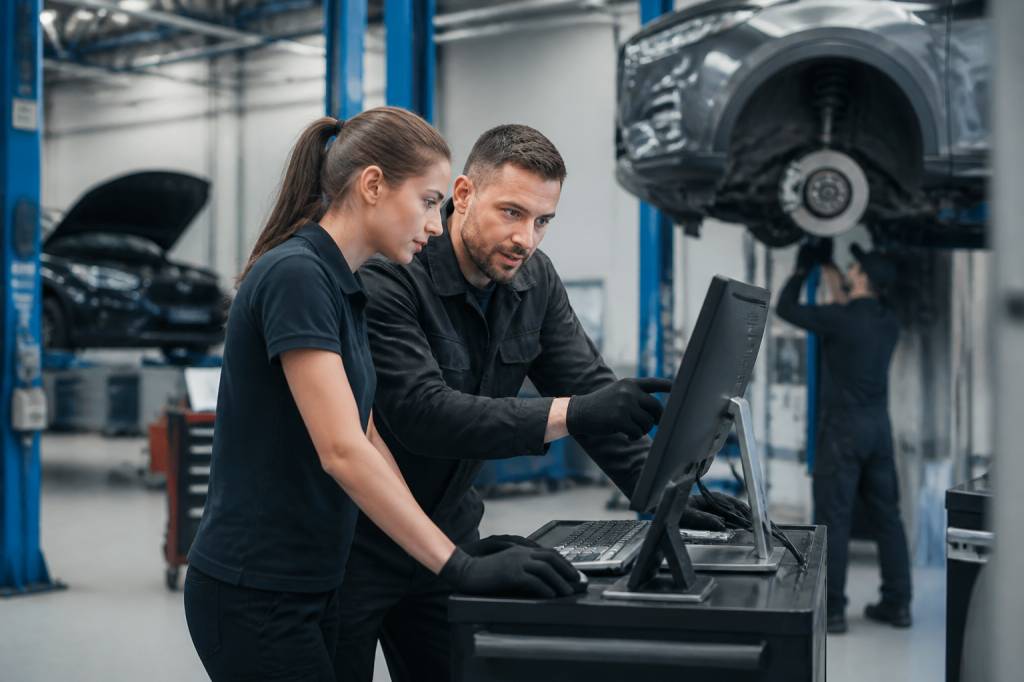
The auto industry has always been a rolling laboratory of change. One minute, the factory floor is tuned for V8s and sheet metal; the next, it’s humming with battery packs, software validation rigs, and AI-driven quality checks. If you’ve been following automotive news lately, you’ve probably noticed something interesting: the story is no longer just about horsepower, range, or market share. It’s also about jobs, hiring, and a labor market that’s shifting gears faster than a dual-clutch gearbox at redline.
For job seekers, that means opportunity. For employers, it means competition. For everyone else who loves cars, it means the industry behind the badge is evolving in ways that affect what gets built, how it gets built, and who gets paid to build it. And yes, there’s plenty of movement under the hood.
The auto industry’s job market is being rebuilt in real time
For decades, automotive employment followed a relatively familiar rhythm. Manufacturing roles dominated, engineering departments grew around internal combustion platforms, and dealerships remained the public face of the business. Today, that rhythm has a new beat. Electrification, software-defined vehicles, automation, and supply chain volatility are reshaping the workforce from the shop floor to the executive suite.
One of the biggest changes is that companies are no longer hiring just for traditional automotive skills. They’re looking for people who understand batteries, embedded systems, data analytics, cybersecurity, AI, and cloud-connected platforms. In other words, the modern car is becoming a rolling computer, and employers need talent that can think like engineers and speak fluent code. A crankshaft specialist from 15 years ago and a vehicle OS engineer today both matter, but they live in very different corners of the garage.
At the same time, legacy automakers are trying to modernize without losing what made them competitive in the first place. That creates a fascinating hiring mix: the industry still needs welders, assembly technicians, procurement experts, logistics managers, and service advisors, while also chasing software engineers, battery chemists, user-experience designers, and data scientists. It’s less “replace the old with the new” and more “bolt the old to the new without dropping a single washer.”
Which automotive jobs are in demand right now?
If you scan the latest hiring trends across OEMs, suppliers, startups, and dealerships, a few roles keep popping up like dashboard warnings you actually want to see.
- EV battery engineers — Demand is rising as automakers scale electric vehicle production and try to improve energy density, charging speed, and thermal management.
- Software and embedded systems engineers — Modern vehicles require continuous development for infotainment, driver assistance, OTA updates, and vehicle control systems.
- Manufacturing automation specialists — Robots may not sip coffee, but they do need people who can configure, maintain, and optimize them.
- Supply chain and logistics managers — Global parts networks remain fragile, so firms are hiring people who can keep production lines from idling.
- Cybersecurity analysts — Connected cars are convenient, but they’re also targets. Automakers now treat digital security as a core vehicle feature.
- Data analysts and AI specialists — From quality control to predictive maintenance, data is steering more decisions than ever.
- Service technicians trained for EVs — Dealerships and repair networks need techs who can safely diagnose high-voltage systems.
- Product managers and UX designers — Software-defined vehicles require a consumer-grade experience, which means hiring talent from tech as well as automotive backgrounds.
This mix tells a clear story: the automotive job market is no longer siloed. A candidate can come from aerospace, consumer electronics, robotics, or clean energy and still be relevant. That cross-pollination is one of the most important hiring trends in the industry today.
Electrification is driving a new talent race
EV adoption is one of the strongest forces behind current automotive hiring. Building electric vehicles is not just a matter of swapping the engine for a battery pack. It changes the entire architecture of the vehicle, the manufacturing process, the supplier base, and the after-sales ecosystem. That means the labor market has to evolve too.
Battery engineering is especially hot. Companies need experts in cell chemistry, pack design, thermal management, charging infrastructure, and battery lifecycle planning. Add in concerns around raw material sourcing and recycling, and you’ve got a job market with both technical complexity and strategic importance.
There’s also the production side. EV factories rely more heavily on automation and precision assembly than many legacy ICE plants. That means employers are seeking workers who can handle advanced machinery, digital diagnostics, and quality assurance systems. The old stereotype of car manufacturing as purely mechanical is out of date. Today, the line between manufacturing and high-tech is so blurred you could mistake it for a concept sketch.
For workers, this is both a challenge and an opening. Some roles tied to internal combustion systems are shrinking, while new ones emerge around EV design, service, and infrastructure. The trick is reskilling early enough to stay on the right side of the transition.
Software is now part of the drivetrain of hiring
If you want proof that cars have become more digital, just look at the résumés companies are chasing. Automakers are hiring software developers at a pace that would have sounded bizarre a generation ago. Vehicle operating systems, infotainment platforms, autonomous features, mobile app integration, over-the-air updates, and remote diagnostics all need software talent.
This is where the hiring market becomes especially interesting. The auto industry is competing with tech firms for engineers who can build scalable, secure, user-friendly systems. That means salaries, benefits, hybrid work policies, and brand reputation suddenly matter more than they used to for some roles. In practical terms, an automaker isn’t just selling a car anymore; it’s selling a connected digital product that happens to have four wheels and a suspension setup.
And unlike traditional product cycles, software development never really stops. Vehicle programs now require updates after launch, not just before it. That creates demand for agile teams, continuous integration pipelines, and cross-functional collaboration between hardware, software, and compliance departments. If that sounds more like Silicon Valley than Detroit, that’s because the industry has moved in that direction without losing its automotive roots.
Hiring trends are shifting beyond the factory gate
Automotive hiring is not only about what happens in plants and engineering centers. Dealerships, mobility startups, aftermarket businesses, EV charging networks, and fleet operators are all hiring in response to broader market changes. The industry is spreading outward like a widening road map.
Dealerships, for example, need staff who can explain EV features, charging habits, software subscriptions, and digital financing tools. That’s a different conversation than selling a traditional sedan, and it requires a different kind of training. Customers may still ask about trunk space and fuel economy, but they’re also wondering about range, home charging, app connectivity, and battery warranties. That makes skilled sales and service staff more valuable than ever.
Meanwhile, fleet operators are hiring professionals who can manage electrification strategies, telematics, and total cost of ownership models. Logistics companies and delivery platforms are especially focused on technicians and analysts who can keep electric fleets on the road without sacrificing uptime. In this world, downtime is not just inconvenient; it’s expensive enough to make a CFO spill their coffee.
On the startup side, mobility companies are building teams with leaner structures and faster decision-making. They often want candidates who can wear multiple hats, move quickly, and adapt as product requirements change. That can be exciting for workers who enjoy variety, though it also comes with the usual startup trade-off: more speed, less predictability.
What employers are looking for in candidates
Technical know-how still matters, of course. But current hiring trends show that employers are placing just as much value on adaptability, collaboration, and systems thinking. The best candidates are not always the ones with the most specialized background; often, they’re the ones who can connect the dots across engineering, manufacturing, software, and business priorities.
Here are the qualities appearing more often in automotive job descriptions:
- Cross-functional communication — Teams need people who can work across departments without translating everything into engineering jargon.
- Digital fluency — Even non-software roles increasingly require comfort with data tools, diagnostics platforms, and connected workflows.
- Problem-solving under pressure — Supply chain disruption and production bottlenecks reward people who can think on their feet.
- Reskilling mindset — Employers want candidates willing to learn new systems as technology evolves.
- Quality and compliance awareness — Safety, emissions, cybersecurity, and regulatory standards remain non-negotiable.
- Comfort with change — In a sector being rewritten by electrification and software, flexibility is a career asset.
That last one might be the most important. In the auto industry, change used to arrive in model-year cycles. Now it feels closer to software release notes: frequent, iterative, and occasionally disruptive. Candidates who treat learning as part of the job have a clear advantage.
Hiring is also being shaped by economics
When talking about automotive news jobs, it’s easy to focus on technology and forget the financial engine underneath it all. But labor demand is always tied to economics. Interest rates, consumer confidence, commodity prices, incentives, trade policy, and demand forecasts all influence hiring decisions.
For example, if EV sales accelerate, automakers expand battery and software hiring. If margins tighten, companies may slow recruitment, prioritize critical roles, or outsource more specialized work. If raw material costs spike, procurement and supply chain teams become even more essential. If a brand launches a major new platform, hiring often surges around engineering, validation, manufacturing, and quality assurance.
This is why the auto industry can seem contradictory from the outside. One month there may be headlines about layoffs or restructuring; the next, announcements about new plants, new technologies, or expanded hiring programs. Both can be true at the same time, because different segments of the industry are moving at different speeds. The workforce is being rebalanced, not frozen in place.
How job seekers can position themselves for the next wave
If you’re looking to break into the automotive world, or move from one part of it to another, timing and positioning matter. The good news is that the industry offers multiple entry points.
Start by identifying where your skills fit best. Mechanical engineers may find pathways in EV drivetrain development, thermal systems, or manufacturing. Software engineers can target ADAS, connected vehicle platforms, or infotainment. Operations professionals may find opportunities in procurement, logistics, and production planning. Technicians with electrical aptitude are especially well placed as EV service networks expand.
It also helps to learn the vocabulary of the new auto economy. Terms like high-voltage safety, telematics, OTA updates, battery management systems, and digital twin are becoming standard language. You don’t need to turn into a jargon machine, but being comfortable with the terms signals that you understand where the industry is headed.
Networking still matters too, and probably more than ever. Automotive careers are often shaped by supplier relationships, regional manufacturing hubs, and specialized industry communities. A well-timed conversation can sometimes open a door faster than a polished résumé alone. Think of it as torque applied in the right place: small input, big result.
The road ahead for automotive jobs
The latest hiring trends suggest that the auto industry is entering a more diverse, more technical, and more competitive labor era. Jobs are expanding beyond traditional manufacturing into software, battery science, AI, cybersecurity, and digital customer experience. At the same time, long-standing roles in production, service, and logistics remain essential to keeping vehicles moving from blueprint to driveway.
For workers, this is a moment to stay alert and adaptable. For employers, it’s a reminder that talent strategy is now as important as product strategy. The companies that win won’t just build the best vehicles; they’ll build the best teams behind them.
And for the rest of us watching from the curb, it’s a fascinating time to follow. Because in today’s automotive world, the headline might be about a new vehicle launch—but the real story is often the people hired to make that launch possible. Under the hood, on the line, in the lab, or behind the code, the future of mobility is being staffed one role at a time.