


Europe’s automotive landscape never sits still for long. One week it’s all about electrification targets, the next it’s a supply chain hiccup, and before you know it, another OEM has shuffled its strategy like a gearbox with a mind of its own. If you’ve been following automotive news Europe over the last months, you’ll know the market is not just moving—it’s recalibrating in real time.
From EV adoption and battery investments to software-defined vehicles and shifting consumer demand, the industry is being pulled in several directions at once. That’s what makes it fascinating. The old rules still matter, but they’re being overlaid with new priorities: digitalization, sustainability, cost discipline, and geopolitical resilience. In other words, Europe’s auto sector is trying to build the next era while still keeping the current one on the road.
Europe’s auto market: steady recovery, but not without potholes
The European car market has shown signs of resilience, but “recovery” here is a relative term. Registration volumes have improved compared to the disruption-heavy years that preceded them, yet the market remains uneven across countries and segments. Fleet sales are supporting demand in several large markets, while private buyers continue to feel the pressure of higher financing costs and overall cost of living.
One notable shift is that buyers are taking longer to decide. The showroom visit no longer ends with a handshake and a delivery date. Instead, customers compare powertrains, charging access, insurance costs, tax treatment, and residual values with near-investor-level seriousness. Who can blame them? When a car purchase starts to feel like a five-year financial strategy, hesitation becomes part of the process.
Across Europe, the premium segment remains comparatively strong, especially where electrified models are offered with genuine range and fast-charging capability. Meanwhile, mass-market brands are under more pressure to balance affordability with compliance. It’s a tough balancing act: too expensive, and the customer walks; too cheap, and margins vanish faster than a test car on an unrestricted Autobahn.
Several trends stand out in the current market:
- Hybrid models continue to act as a bridge for buyers not ready to go fully electric.
- Battery-electric vehicles are gaining share, but adoption remains uneven by country.
- Commercial fleets are still a major force in driving new registrations.
- Used-car pricing remains influential in shaping new-car demand and brand loyalty.
Electrification remains the headline act
If there’s one theme that dominates automotive news Europe, it’s electrification. Not because it’s new, but because it has become the strategic core of nearly every manufacturer’s roadmap. The shift away from pure combustion is no longer theoretical. It is happening in factories, product plans, supplier contracts, and boardroom presentations across the continent.
That said, the pace of the transition is more nuanced than some headlines suggest. Battery-electric vehicles are growing, but not uniformly. Countries with strong charging infrastructure, supportive incentives, and favorable tax regimes are seeing faster uptake. Elsewhere, the transition is slower, shaped by range anxiety, upfront price sensitivity, and a patchy public charging network.
Hybrid technology continues to play a surprisingly important role. For many buyers, plug-in hybrids and full hybrids offer a practical compromise: lower emissions, easier long-distance use, and less dependence on charging access. For manufacturers, they also provide breathing room while scaling full-EV platforms. Think of them as the industry’s well-tuned intermediate gear—not the final destination, but very useful on the climb.
Meanwhile, battery innovation is shaping the competitive map. OEMs are investing in next-generation chemistries, improved energy density, and faster charging capabilities. At the same time, localization is becoming a strategic priority. Building batteries closer to assembly plants reduces logistics risk and improves control over a supply chain that has been anything but boring.
Chinese competition is forcing European brands to sharpen up
Another major storyline in Europe’s auto industry is the rise of Chinese brands and Chinese-backed electric vehicle offerings. Whether in the compact EV segment, the crossover space, or even the premium bracket, competition has intensified. These companies are arriving with attractive pricing, modern software, and increasingly polished designs. In some cases, they’re entering Europe with the confidence of someone who has already memorized the circuit and is now looking for a lap record.
This is putting pressure on traditional European manufacturers to respond faster and smarter. Price competitiveness alone is not enough; brands now need to deliver value in software, charging performance, user experience, and total cost of ownership. That’s a tall order when legacy structures, labor costs, and established dealer networks are all part of the equation.
European OEMs are not standing still. Many are accelerating platform sharing, reducing trim complexity, and reviewing how they market their EV portfolios. The message is clear: customers don’t just want a cleaner car, they want a better one. And increasingly, “better” means intuitive infotainment, over-the-air updates, and a smartphone-style interface that doesn’t require a degree in menu navigation.
This competitive pressure is already reshaping product strategy. Some brands are launching smaller, more affordable EVs sooner than planned. Others are delaying or reshaping model rollouts to protect profitability. The result is a more disciplined, but also more uncertain, market environment.
Regulation, emissions targets, and the long road to compliance
In Europe, regulation is never far from the driver’s seat. Emissions rules, safety requirements, and industrial policy all play a major role in shaping what gets built, where it gets built, and how much it costs. For automakers, compliance is now a strategic function, not just a legal box to tick.
The pressure to reduce fleet CO2 emissions continues to influence product planning. Manufacturers are carefully balancing high-volume models, electrified variants, and regional sales mixes to stay within the rules. A model that sells well in one market may create compliance headaches in another, which makes the planning process feel a bit like solving a Rubik’s Cube while the car is already moving.
At the same time, safety and software regulation are becoming increasingly important. As vehicles become more connected and more autonomous in their capabilities, Europe is tightening oversight on cybersecurity, driver assistance systems, and data handling. That is good news for consumers, but it also adds development costs and longer validation cycles for manufacturers.
There’s also a broader policy question looming over the sector: how to maintain industrial competitiveness while pushing decarbonization. Europe wants cleaner cars, but it also wants to preserve manufacturing jobs, battery sovereignty, and engineering leadership. That combination requires careful policy coordination—and a lot of patience from everyone involved.
Software-defined vehicles are changing the rules of engagement
One of the most important shifts in automotive news Europe is the rise of the software-defined vehicle. This is more than a buzzword. It marks a structural change in how cars are designed, sold, updated, and monetized. The vehicle is no longer just a machine with embedded electronics; it is a digital platform on wheels.
For automakers, this opens new opportunities. Over-the-air updates can fix bugs, unlock features, and extend product lifecycles. Subscription services and digital add-ons create new revenue streams. Data can be used to improve maintenance, personalize the user experience, and support fleet management. In theory, it’s a win-win. In practice, the challenge is making sure customers feel they’re getting value, not just paying for features that used to be included in the glovebox packet of dreams.
European brands are investing heavily in this area, but execution varies widely. Some have built elegant digital ecosystems with strong integration between vehicle, app, and cloud services. Others are still wrestling with fragmented software stacks, slower update cycles, and user interfaces that can test even the calmest driver’s patience at a red light.
The winners in this next phase will likely be the companies that combine hardware excellence with software fluency. That means better collaboration between engineering and IT teams, faster development cycles, and a more consumer-friendly approach to digital services.
Factories, batteries, and the economics behind the headlines
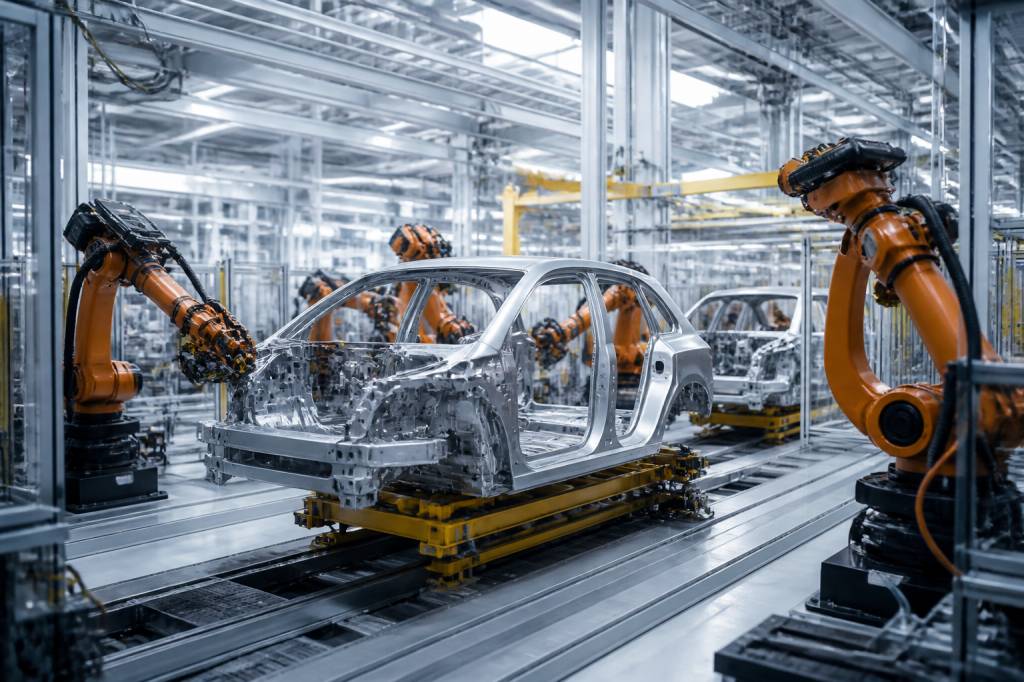
It’s easy to focus on the shiny side of the industry—the concept cars, the new debuts, the futuristic interiors. But the real story often lives behind the factory gates. Investment decisions, plant upgrades, and supplier shifts are where the economics of the automotive sector become tangible.
Across Europe, automakers and suppliers are reassessing where to build, assemble, and source critical components. Battery plants, in particular, are central to this transformation. They promise industrial renewal, but they also carry risk: high capital expenditure, uncertain demand curves, and intense global competition. If the volume ramp-up is delayed, the financial pain can spread quickly through the supply chain.
Suppliers are under pressure as well. They must invest in electrification, software, lightweight materials, and advanced manufacturing while dealing with shorter product cycles and tighter pricing. Many are diversifying their customer base or moving into higher-value services to reduce dependence on traditional powertrain business lines.
Here are a few economic realities shaping the sector right now:
- Capital intensity is rising, especially in EV and battery-related production.
- Margin pressure remains high as OEMs fight for affordability and compliance.
- Supply chain localization is becoming a strategic hedge against disruption.
- Labor and energy costs continue to influence manufacturing decisions in Europe.
What buyers and enthusiasts should watch next
For readers tracking the European car industry, the next phase will be defined by execution. The big questions are no longer “Will electrification happen?” or “Will software matter?” Those answers are already in motion. The real question is who will execute best, at scale, and with enough profitability to keep the wheels turning.
Keep an eye on compact EV launches, because that segment could become the battleground of the next few years. Affordable electric cars with usable range and strong charging speed will be crucial to broad adoption. Also watch for more model rationalization, as brands simplify lineups to focus on products with the strongest business case.
Another area to monitor is the evolving relationship between Europe and China, both in terms of competition and industrial policy. Tariffs, trade rules, and local production strategies will all influence the shape of the market. This won’t be a quiet chapter.
For enthusiasts, the good news is that the industry is not becoming less interesting—it’s becoming more layered. Yes, the spreadsheet has become more important than ever. But the cars themselves are also getting smarter, faster to update, and more capable in ways that would have sounded like science fiction not long ago. The future is not arriving in a single dramatic reveal; it’s rolling in by increments, platform by platform, software update by software update.
And that’s what makes European automotive news so compelling right now. It’s a market in transition, driven by regulation, technology, competition, and economics. Some brands will adapt gracefully, others will stall in the middle lane, and a few may surprise everyone with a perfectly timed overtake. Either way, the road ahead promises plenty to watch, analyze, and enjoy.