


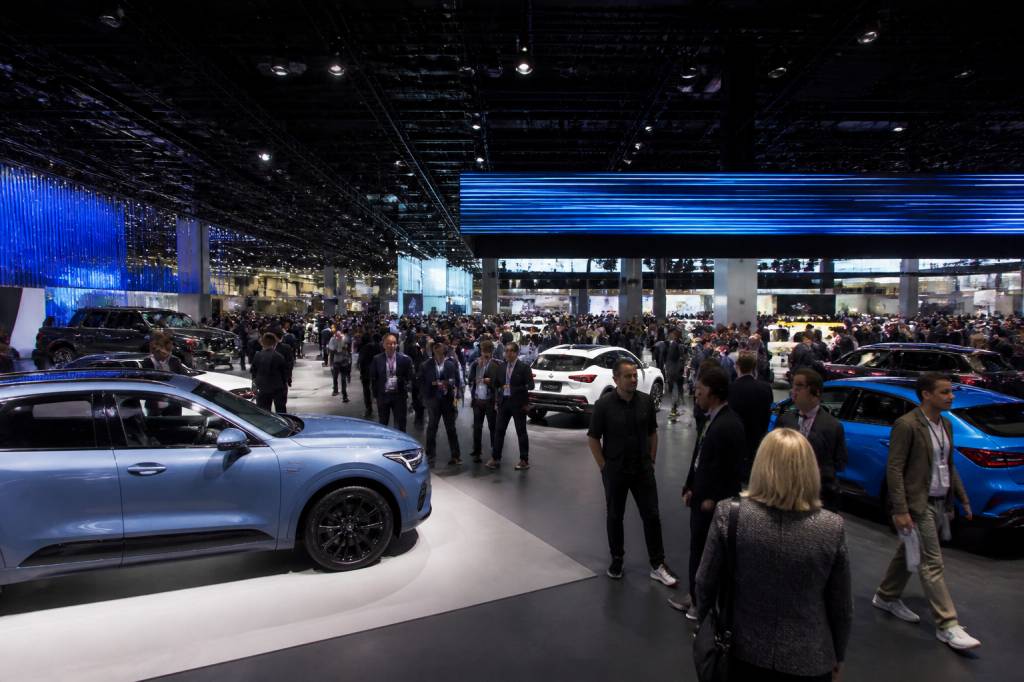
Detroit still sets the pace
Every time Detroit sneezes, the automotive world checks its mirrors. That old saying still holds true, even as the industry’s center of gravity spreads across software hubs, battery corridors, and EV-friendly states. But Detroit remains Detroit: the city where steel, horsepower, supplier muscle, and boardroom strategy still share the same garage. If you want to understand where the auto market is heading, you don’t just watch the launches—you watch the moves behind them.
And lately, the Detroit conversation has been unusually rich. New product cycles are accelerating, electrification is no longer a side project, and the market is sending some very clear signals: buyers want value, flexibility, and technology that works without needing a PhD in charging etiquette. The result? A mix of fresh models, factory reshuffling, and a bit of corporate chess. Fasten your seat belt; the city is in motion.
The latest industry pulse: electrification, but with a reality check
Detroit automakers have not slowed down on electrification, but the tone has changed. A couple of years ago, the message sounded like full speed ahead, no matter the road conditions. Now it’s more nuanced. Manufacturers are still investing heavily in EV platforms, battery sourcing, and software architectures, but they’re also adjusting to demand that is proving less linear than the PowerPoint slides suggested.
That matters. The market has been teaching a simple lesson: consumers like range, performance, and lower running costs, but they also care about price tags, charging access, and whether a vehicle fits their daily life. In other words, a great EV still needs to be a great car. Revolutionary? Maybe not. Necessary? Absolutely.
Detroit brands are responding by broadening their approach. Instead of betting everything on one powertrain strategy, they are mixing EVs, hybrids, plug-in hybrids, and efficient combustion models to keep showrooms relevant. That flexibility is becoming a competitive weapon. It’s not flashy, but it’s smart. And in this market, smart often wins the race before the light turns green.
- EV investment continues, but timelines are being calibrated more carefully.
- Hybrids are gaining renewed attention as a bridge technology.
- Affordability is now a central design and marketing priority.
- Software-defined vehicles are becoming a key battleground for differentiation.
Launches that matter: what Detroit is putting on the road
When people think of Detroit launches, they often imagine giant pickup trucks, bold SUV silhouettes, and the occasional halo car with just enough drama to make the press tent go quiet. That image is still relevant, but the lineup is evolving. The biggest launches now tend to do more than look good under showroom lights; they need to solve practical problems.
One of the clearest trends is the continued evolution of full-size trucks and SUVs. These vehicles remain the financial engines of many Detroit brands, and for good reason. They combine strong margins with consumer loyalty that borders on emotional attachment. Manufacturers know that if you get the truck right, the rest of the product plan can breathe a little easier.
Recent product strategies around the Detroit market have leaned heavily on updated interiors, improved infotainment systems, better driver-assistance tech, and more efficient powertrain options. The message is clear: buyers may still want brute strength, but they also want the cabin to feel like a place worth spending time in. A truck that tows well is good. A truck that tows well and doesn’t feel like a 2012 office cubicle on wheels? Much better.
On the EV side, new launches are increasingly focused on making electric ownership feel normal rather than experimental. That means familiar body styles, easier charging integration, and price points that don’t require a second mortgage. A lot of the industry’s early EV messaging centered on shock value. Detroit’s newer approach is more grounded: make the transition less intimidating, and more people will take the wheel.
- Updated pickup trucks continue to anchor profit and brand identity.
- Large SUVs are being refined with better digital interfaces and comfort features.
- New EV launches are focusing on usability rather than just headline range.
- Performance trims remain important for image, even when volume comes from mainstream variants.
Market trends shaping Detroit’s next moves
If you really want to read the road ahead, you need to look beyond launch events and into the market data. Detroit is reacting to several powerful trends, and each one is nudging product plans in a different direction. Think of it as a multi-lane highway with no room for hesitation.
First, affordability is back in the driver’s seat. Higher borrowing costs have made monthly payments a decisive factor for many buyers, and that changes the game. Even premium brands are feeling the pressure to justify value. At the mass-market level, automakers are working to keep vehicles attractive without loading them with so much content that pricing becomes a deal-breaker.
Second, buyers are holding onto vehicles longer. That pushes automakers to improve durability, software support, and resale value. It also reinforces the importance of service, parts, and over-the-air updates. A car is no longer sold the day it leaves the lot; it’s judged over years, and increasingly, over software cycles. Welcome to the age of the rolling product lifecycle.
Third, the SUV and truck dominance remains strong, but the market is fragmenting within those categories. Compact crossovers, three-row SUVs, and electrified utility vehicles are all competing for attention. Detroit brands are trying to ensure they have a presence in every profitable corner. Nobody wants to discover that the most important segment in the room belongs to someone else.
Supplier pressure and production strategy
Behind every shiny launch is a less glamorous but crucial story: suppliers, tooling, and production planning. Detroit’s automakers live and die by the health of their supplier networks. As new platforms roll out and powertrain strategies shift, suppliers have to adapt quickly—sometimes faster than is comfortable. That can mean retooling plants, requalifying components, or managing a mix of legacy and next-gen parts in the same supply chain.
This is where the business side becomes as important as the product side. A model may look ready on stage, but if battery modules, chips, castings, or seat components are delayed, the schedule starts to wobble. And wobbling is not what you want when launch windows are built around competitive timing and dealer expectations.
Detroit’s advantage is that it still has deep industrial roots. The region knows how to make things at scale. But the modern game requires more than scale alone. It demands agility, software coordination, and a lot of patience when the parts map gets messy. In that sense, the old Motor City is learning to become a digital city without losing its mechanical soul. Not an easy fit, but an important one.
Software is becoming the hidden engine
For decades, the most important part of a car was what you could see and hear: engine, suspension, transmission, exhaust note. Today, one of the most important differentiators is invisible. Software is now the hidden engine of the automotive industry, and Detroit companies are investing accordingly.
That includes infotainment systems, advanced driver assistance features, connected services, battery management, and platform architecture that can support future upgrades. The goal is simple: keep the vehicle relevant longer and create recurring revenue opportunities beyond the initial sale. If that sounds a bit Silicon Valley, that’s because it is. But Detroit is translating the idea into a language the industry understands: build, scale, ship, and improve.
There’s also a practical reason software matters so much. Buyers now expect their vehicles to function like smart devices with wheels. If the user interface is clunky, if the screens lag, or if updates feel like an afterthought, the whole ownership experience takes a hit. It’s amazing how quickly a fancy dashboard can lose its shine if basic functions are buried three menus deep. Convenience has become a performance metric.
What buyers are rewarding right now
Detroit’s product planners are watching buyer behavior closely, and the pattern is pretty clear. Consumers are not simply chasing the newest badge or the biggest screen. They are rewarding vehicles that feel intelligent, efficient, and easy to live with. That means better cabin packaging, useful technology, and enough emotional appeal to keep the purchase from feeling purely rational.
In practical terms, this is why well-executed hybrids are gaining momentum. They offer a taste of electrification without forcing every driver to reorganize their daily routine around charging. They also help brands reduce fleet emissions while keeping customers comfortable with the transition. In the current market, hybrids are not a compromise. They are often the answer to a question buyers are already asking.
At the same time, performance still matters. Detroit knows its audience, and it knows the emotional pull of torque, acceleration, and road presence. Even as efficiency becomes more important, brand identity still leans on vehicles that can stir the heart. A smart automaker doesn’t choose between logic and emotion; it calibrates both. That’s the sweet spot.
- Affordability and monthly payment sensitivity are shaping purchase decisions.
- Hybrid offerings are becoming more attractive as charging remains uneven.
- Tech usability matters as much as feature count.
- Performance still plays a major role in brand perception.
Detroit’s future: not one lane, but several
One of the biggest shifts in automotive strategy is the acceptance that the future will not arrive in a single, neat package. Detroit is no longer treating the industry as a one-size-fits-all transition from combustion to electric. Instead, the roadmap looks more like a multi-lane highway: EVs for some segments, hybrids for others, refreshed gasoline models where demand remains strong, and software upgrades across the board.
That approach may seem less dramatic than a grand transformation narrative, but it is far more durable. The companies that survive the next cycle will likely be those that can adapt to regional demand, pricing pressure, regulatory changes, and infrastructure realities without missing too many shifts. In automotive, as in driving, overcorrecting is rarely the best move.
Detroit’s strengths still matter here. Brand recognition, manufacturing scale, engineering depth, and dealer networks remain powerful assets. The challenge is to use them in a market that is changing faster than the old playbook expected. Those who can align product, pricing, and production will keep momentum. Those who can’t may find themselves stuck in traffic while the rest of the field takes the exit ramp.
Why this moment feels different
What makes the current Detroit auto news cycle so interesting is that it feels less like a hype wave and more like a true adjustment phase. The industry has moved past the easy slogans. Now it has to prove that its next-generation vehicles are not just technologically ambitious, but commercially viable and emotionally compelling.
That’s a tougher test, but also a more honest one. Great vehicles still need great engineering. Great strategy still needs real-world demand. And great headlines still need a business model underneath them. Detroit has always understood that cars are built from both metal and math. Right now, the math is getting stricter, and the metal is getting smarter.
So yes, the latest automotive news from Detroit is about launches, market trends, and industry updates. But underneath all that, it’s really about adaptation. The companies that can balance power with efficiency, software with simplicity, and ambition with pricing discipline will be the ones steering the conversation next season. And in Detroit, being ahead of the curve has never gone out of style.