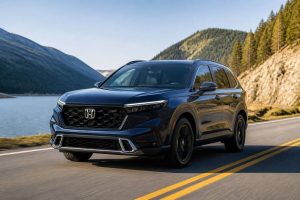
Automotive China: how Chinese carmakers are reshaping the global auto market
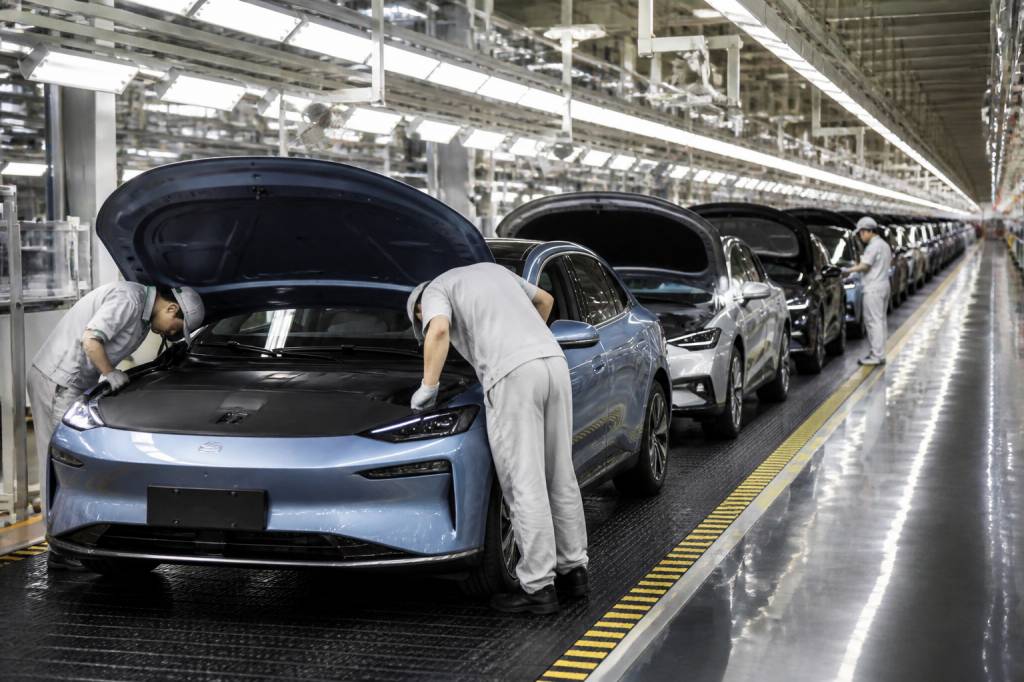
Automotive China: how Chinese carmakers are reshaping the global auto market
If you still picture Chinese cars as budget-only alternatives with questionable badge appeal, the global auto market has already moved on without you. Quietly at first, then with full-throttle confidence, Chinese automakers have gone from domestic contenders to international disruptors. And they are not just exporting more cars; they are exporting a different way of building, pricing, and even imagining the automobile.
What makes this shift so fascinating is that it is not happening in a vacuum. It is taking place while the industry is wrestling with electrification, software-defined vehicles, supply chain shocks, tighter regulations, and a consumer base that expects more tech for less money. In other words, Chinese carmakers did not arrive late to the party. They arrived just as the dance floor changed.
From local underdog to global heavyweight
A decade ago, most Chinese brands were fighting for credibility at home, let alone abroad. Today, names like BYD, Geely, Chery, SAIC, Great Wall Motor, and Nio are appearing in more and more markets, from Europe to Southeast Asia, Latin America, the Middle East, and beyond. Some are entering through exports. Others are setting up local assembly, partnerships, and distribution networks. The strategy varies, but the goal is the same: be taken seriously as global automakers, not regional curiosities.
The rise has been powered by scale, speed, and a willingness to go where the market is heading rather than where it has been. Chinese brands saw the electric vehicle transition not as a threat but as a highway on-ramp. While legacy automakers were still trying to decide which lane to occupy, several Chinese players were already accelerating past the merge point.
That matters because the industry rewards timing almost as much as engineering. If you can deliver EVs with competitive range, strong software, and aggressive pricing before your rivals finish their internal debates, you gain something priceless: momentum. And momentum in the car business is not just a nice feeling. It is market share with a steering wheel.
Why EVs became the launchpad
Electric vehicles are the main reason Chinese automakers have become such a major force. China did not just adopt EVs early; it built an ecosystem around them. Batteries, motors, power electronics, charging infrastructure, software, and raw material supply chains all developed in parallel. That integration gave Chinese companies a structural advantage that is hard to replicate overnight.
Take BYD, for example. The company started as a battery manufacturer, and that origin story matters. Batteries are not just one component among many; they are the heart, lungs, and wallet of an EV. If you understand them deeply, you can control cost, performance, and availability in ways rivals envy. BYD’s vertical integration has helped it scale into one of the world’s biggest EV makers while keeping prices sharp enough to make competitors sweat through their seat stitching.
Then there is the software angle. Chinese EVs often arrive with large screens, fast interfaces, advanced driver assistance systems, and features that feel more like consumer electronics than old-school automotive hardware. That is no accident. China’s auto industry grew up in a market where tech adoption is fast, consumers are digitally fluent, and “good enough” gets punished quickly. The result? Cars that are increasingly defined by user experience, not just horsepower and leather trim.
For buyers, that changes the value equation dramatically. If a vehicle offers strong range, fast charging, smart features, and a lower price tag than a European or Japanese rival, the badge starts to matter a little less. Not always, of course. Brand prestige still counts. But range anxiety, charging speed, and monthly payments tend to be very persuasive co-pilots.
The pricing pressure legacy automakers did not ask for
One of the biggest disruptions Chinese automakers have introduced is pricing pressure. Global brands have long operated under a familiar formula: established name, trusted engineering, premium margin. Chinese OEMs have challenged that formula by offering vehicles that are often comparable in equipment but cheaper to buy.
This is not just about low labor costs, as some critics lazily suggest. The bigger story is industrial efficiency. Chinese manufacturers benefit from massive domestic scale, shorter iteration cycles, deep supplier networks, and intense competition at home. When you can test, refine, and launch quickly in one of the world’s most demanding markets, your product development tempo becomes a weapon.
That puts legacy automakers in a difficult position. Match the price, and margins get squeezed. Keep the price high, and value-conscious buyers may look elsewhere. Add tariffs, trade barriers, and local content requirements into the mix, and the chessboard gets even more complicated. The old playbook of “we charge more because we are better” is under pressure. In today’s market, better had better show up on the spec sheet, not just in the marketing deck.
Some Western brands are responding by trimming features, rethinking platforms, and accelerating cost-down programs. Others are leaning harder into brand heritage and premium positioning. But the uncomfortable reality remains: Chinese automakers have changed what consumers now consider reasonable for the money.
Design, tech, and the new automotive user experience
It would be a mistake to think Chinese brands compete only on price. Many of the newer models are surprisingly polished, with modern styling, high-quality cabin materials, and interface design that feels deliberately contemporary. In some cases, the interiors look as if they were designed by a smartphone team that briefly wandered into a motor show and decided to stay.
That emphasis on UX is not cosmetic. In an EV, the software experience is part of the product. The climate controls, navigation, charging management, voice assistant, over-the-air updates, and driver assistance systems all affect whether the car feels clever or merely electric. Chinese automakers know this, and many have invested heavily in cockpit design and digital ecosystems.
There is also a growing willingness to experiment with futuristic concepts. Sliding screens, rotating displays, lounge-like seating, advanced lidar setups, and semi-autonomous features are increasingly common talking points. Not every idea will survive the Darwinian test of daily ownership, potholes, and impatient commuters. But the pace of experimentation itself is important. It signals a market that is still shaping the future rather than polishing the past.
For consumers, the benefit is obvious: more choice, more technology, and often more equipment per euro, dollar, or yuan. For the rest of the industry, the message is less comfortable: innovation no longer belongs to a handful of familiar badges.
China’s home market is an engine, not just a base
China’s domestic market deserves special attention because it is not merely a launchpad. It is a brutal proving ground. Competition is fierce, consumers are digitally informed, and product cycles move at a pace that can make traditional automakers look like they are shifting through traffic in second gear.
Brands that succeed in China often emerge stronger and more adaptable. They learn how to respond to policy shifts, changing consumer tastes, and rapid technology transitions. They also face pressure to innovate quickly, because standing still in such a dense market is a great way to get rear-ended by a rival’s next model launch.
Government policy has also played a major role, especially in supporting EV adoption, charging infrastructure, and battery development. The result is an ecosystem where domestic brands have been able to grow at remarkable speed. That support has drawn criticism abroad, particularly from governments concerned about unfair competition. Yet regardless of the debate, the outcome is undeniable: China has created an auto environment where scale and innovation feed each other.
For global observers, the lesson is not simply that China subsidized its way to the top. The deeper lesson is that industrial strategy matters. When a country aligns policy, capital, supply chains, and consumer incentives around a future technology, the market tends to notice. And sometimes it notices a little too late.
How Chinese automakers are expanding abroad
International expansion is where things get even more interesting. Chinese brands are not all using the same route. Some are exporting finished vehicles directly. Others are building local partnerships or exploring regional assembly plants to reduce tariffs and improve market access. The method depends on the destination, the regulatory climate, and the brand’s ambition level.
Europe has become a particularly important battleground. It offers affluent buyers, a strong EV policy environment, and a taste for compact, efficient, tech-forward vehicles. But it also brings regulatory complexity, brand loyalty, and a high level of scrutiny. Chinese automakers entering Europe must do more than ship cars across the ocean. They must prove durability, safety, service quality, and long-term support. In other words, they need more than a sharp price; they need staying power.
Emerging markets tell a slightly different story. In parts of Latin America, the Middle East, and Southeast Asia, Chinese brands can move faster because buyers are often more open to new entrants and value propositions. In some of these markets, Chinese vehicles are replacing older imports or filling gaps that traditional brands have left open. The formula is simple but effective: modern product, accessible pricing, and enough after-sales confidence to get the deal across the line.
What is especially notable is the speed at which reputations are changing. A brand that once needed a long explanation now often needs only a test drive. That is a significant shift in a business where trust has historically been built over generations.
Trade tensions, tariffs, and the roadblocks ahead
No major industry shake-up arrives without resistance, and the global response to Chinese automakers is increasingly shaped by trade policy. Tariffs, anti-subsidy investigations, local sourcing requirements, and regulatory barriers are all part of the current landscape. Governments want to protect domestic industry, preserve jobs, and avoid becoming dependent on imports that may undercut local production.
This creates a complicated future. If Chinese brands keep exporting aggressively, trade tensions may intensify. If they localize production, they can reduce friction but face new costs and operational challenges. Either way, the growth path is no longer a straight line. It is more like a winding mountain road with a few unexpected hairpins and a regulatory checkpoint or two.
There is also the question of trust. Some buyers and policymakers are concerned about data security, software control, and strategic dependence on foreign technology. Since modern vehicles are increasingly connected devices, those concerns are not trivial. A car is no longer just a machine with wheels. It is a rolling computer with microphones, sensors, data logs, and over-the-air update capability. That is great for functionality, but it makes geopolitics part of the ownership experience.
Still, barriers tend to slow momentum more than they stop it. Chinese manufacturers have already shown a strong ability to adapt. If one route closes, they explore another. If direct export becomes difficult, they localize. If a market is skeptical, they sharpen the value proposition. The engine of expansion is still running.
What this means for buyers and the industry
For car buyers, the rise of Chinese automakers is mostly good news. More competition usually means better prices, more features, and faster innovation. It also means the market is no longer divided neatly between “premium Western” and “affordable everything else.” That old hierarchy is getting fuzzier by the month.
For the industry, the pressure is immense. Traditional automakers must become leaner, faster, and more digitally competent. Suppliers need to adapt to new architectures and procurement models. Dealers must rethink how they sell cars that are as much software products as mechanical ones. And executives who still believe the market will eventually return to old habits may want to check the rearview mirror. The future is already in the passing lane.
There is also a cultural shift underway. Chinese carmakers are no longer content to be perceived as imitators or low-cost alternatives. They want to be seen as innovators, and in many areas, they already are. Whether it is battery technology, infotainment, manufacturing speed, or product planning, they are reshaping expectations for what a modern car should offer.
That does not mean every Chinese model is a home run. Some brands will stumble. Some products will be overhyped. Some ambitious launches will discover that global markets are less forgiving than domestic ones. But that is true of any serious challenger. The difference here is that the challengers are arriving with scale, ambition, and a well-charged battery pack.
So if the global auto market feels more competitive, more technologically intense, and a little less predictable than it used to, that is not your imagination. Chinese automakers have entered the conversation in a way that cannot be ignored. They are influencing prices, shaping EV strategy, accelerating software development, and forcing the industry to rethink its assumptions.
And for anyone who loves cars, that makes the next few years very interesting indeed. The competition is sharper, the innovation is faster, and the road ahead is full of detours worth watching.