Automaker news: the latest trends shaping the U.S. auto industry
Automaker news: the latest trends shaping the U.S. auto industry
The American auto industry is changing lanes, but not all at once. Electric vehicles are growing, hybrids are finding fresh momentum, factories are being retooled, and automakers are learning that a clever software feature can matter almost as much as a horsepower figure. Meanwhile, buyers are still watching the monthly payment like a hawk watches a parking spot.
That tension is shaping the latest automaker news across the United States. The big story is not one technology or one brand. It is how manufacturers balance innovation with affordability, policy shifts, supply-chain realities, and what drivers actually want to take home. Here are the trends moving the industry—and what they mean on the road.
Electric vehicles enter a more practical phase
For years, the EV conversation was dominated by ambitious targets, sleek concept cars, and promises of ever-longer range. Those goals still matter, but the focus is becoming more practical: Can a new electric model sell at a price people can manage? Can drivers charge it easily? And can the automaker build it profitably?
That shift is visible in product plans. Several manufacturers have adjusted launch schedules, reconsidered the size of planned investments, or placed greater emphasis on lower-cost models. This is not the death of the electric car. It is a reminder that a new drivetrain still has to pass the oldest test in the showroom: Does the value make sense?
Battery costs, charging access, and vehicle prices remain central to that calculation. A driver with a home charger and a predictable commute may find an EV wonderfully convenient. Someone who parks on the street or regularly drives long distances through areas with sparse charging may reach a different conclusion. Automakers increasingly have to design for both customers, not just the idealized early adopter.
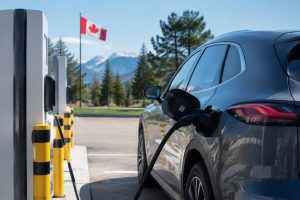
Range remains a headline number, but it is not the whole story. Charging speed, cold-weather performance, route planning, and access to reliable stations can matter just as much. A vehicle that charges quickly during a road trip can feel more useful than one with a larger battery that spends longer plugged in. In other words, the charging stop is becoming part of the product—not merely an accessory to it.
Hybrids are back in the fast lane
While EVs work through their growing pains, hybrids have become an attractive middle ground. They pair an internal-combustion engine with electric assistance, often improving fuel economy without requiring drivers to plug in. For shoppers who want fewer fuel stops but are not ready to plan life around charging, that can be a persuasive combination.
The appeal is easy to understand. A conventional hybrid can run on gasoline and recharge its battery through braking and engine operation. A plug-in hybrid adds the ability to charge externally and may cover some everyday trips on electricity, while retaining an engine for longer journeys. The two approaches serve different needs, and the badges can sound similar enough to confuse anyone browsing a crowded dealer lot.
Automakers are responding with more hybrid options across familiar segments, including SUVs and pickups. That matters because many American buyers want efficiency without giving up cargo space, towing capability, or a comfortable highway ride. The engineering challenge is to deliver those benefits without making the vehicle too expensive or compromising the qualities customers came for.
Hybrids also give manufacturers a flexible way to reduce fuel consumption while battery-electric infrastructure and demand continue to develop. Think of them as a bridge, not necessarily the destination. And, like any good bridge, they are most useful when they connect two places drivers genuinely want to go.
Affordability is the industry’s toughest test drive
Vehicle prices and financing costs have made affordability a defining issue. A model can win design awards, offer impressive technology, and boast a cabin that feels like a first-class lounge. If the monthly payment is out of reach, however, the buyer may admire it from the sidewalk.
That pressure is prompting automakers to reconsider what belongs in a vehicle and what should be an optional extra. Large touchscreens, advanced driver-assistance systems, premium audio, and connected services can make a car feel modern. They can also add cost, complexity, and the occasional menu that seems to require a co-pilot just to adjust the fan.
Manufacturers are therefore trying to make more accessible models without stripping away the features customers expect. This is especially important for EVs, where battery packs can represent a substantial share of vehicle cost. Lower-priced electric models will depend not only on clever design, but also on battery chemistry, production scale, and disciplined purchasing.
There is also a broader business question: should automakers chase high-margin luxury vehicles, or build more affordable cars that can reach a much larger audience? The answer is rarely one or the other. Companies need profitable products, but a lineup that drifts too far from everyday buyers risks leaving the field open to competitors.
Factories and supply chains are being rewired
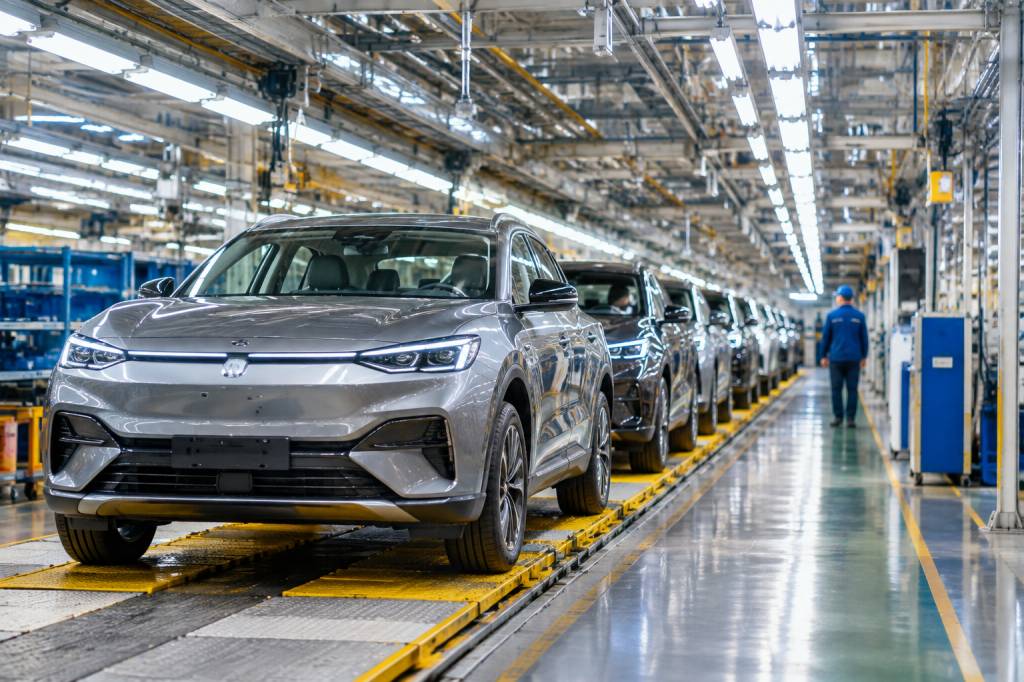
The vehicles arriving in showrooms are only the visible end of a much larger transformation. Automakers are investing in factories, battery production, software operations, and supplier relationships—often while trying to keep existing plants running. It is a high-speed pit stop conducted around a moving car.
Battery supply has become a strategic concern. Companies want reliable access to critical materials and components, while governments use incentives, trade rules, and domestic-content requirements to encourage production in North America. Those policies can influence where an automaker builds a battery, sources a component, or assembles a vehicle.
The result is a more regional approach to manufacturing. A company may seek to produce key parts closer to its customers and final assembly plants, reducing exposure to shipping delays and geopolitical shocks. That can improve resilience, although it does not automatically make production cheaper. Building a local supply network takes time, investment, and a steady stream of orders.
Trade policy adds another layer of uncertainty. Tariffs or changing import rules can alter the economics of a model almost as quickly as a redesign. Automakers must make long-term decisions—factories can take years to plan and build—in a policy environment that may shift much sooner. For executives, forecasting now requires more than a good spreadsheet; it takes a reliable crystal ball, preferably one with a warranty.
Software is becoming part of the powertrain
Modern vehicles are increasingly defined by software. Drivers already rely on digital navigation, smartphone integration, over-the-air updates, and driver-assistance features. Automakers see software as a way to add capability after a vehicle leaves the factory and, in some cases, build continuing revenue through subscriptions or paid features.
But the opportunity comes with a warning light. Customers may welcome updates that improve performance or fix a problem without a service visit. They can be less enthusiastic when a feature they assumed was included becomes a recurring charge. The difference between “my car got better overnight” and “my car wants another subscription” is not a small one.
Automakers also face a demanding reliability challenge. A phone app that freezes is annoying; a vehicle system that behaves unpredictably can undermine confidence. Software must work smoothly with safety systems, batteries, brakes, and the many electronic components that now communicate behind the dashboard. The screen may look simple. The engineering underneath it is anything but.
That makes the ownership experience a competitive battleground. A responsive interface, clear navigation, and dependable connectivity can help a vehicle stand out. So can the basics: physical controls for frequently used functions, an intuitive climate system, and a system that does not require three taps to find the radio. Tech should make driving easier, not turn every commute into a software tutorial.
Competition is intensifying—and becoming more global
American automakers are competing not only with traditional domestic rivals but with established manufacturers from Europe, Japan, and South Korea, as well as fast-moving EV companies. Each brings a different advantage: manufacturing scale, battery expertise, strong dealer networks, brand loyalty, or the ability to develop digital features quickly.
Chinese automakers have also become a major part of the global EV discussion. Their vehicles and battery businesses have added pressure to the worldwide competition, even as U.S. trade and security policies restrict or complicate access to the American market. The competitive effect is still felt indirectly: global rivals are pushed to improve cost, technology, and speed, whether or not their vehicles are sold in the United States.
For U.S. manufacturers, the challenge is to make products that feel distinctly useful to American drivers. That may mean a practical electric SUV, a hybrid pickup, or an affordable commuter car—not simply a vehicle with the largest screen or the most dramatic launch video. Brand loyalty is valuable, but it is not indestructible. If a rival offers better value, customers will notice.
Dealers are adapting too. They must explain new powertrains, charging options, and software features while still helping customers compare warranties, financing, and trade-in values. The sales process can be more complicated than it was when the main question was whether the V6 had enough punch. A little clarity goes a long way.
Autonomous driving advances in measured steps
Self-driving technology continues to attract attention, but the near-term story is less about robotaxis taking over every street and more about driver assistance becoming more capable. Systems that help maintain speed, stay centered in a lane, or manage traffic can reduce the workload on certain roads. They do not make a vehicle autonomous, and drivers must remain attentive and ready to take control.
That distinction matters. Marketing language can make advanced systems sound more capable than they are, while real-world performance depends on road markings, weather, traffic, and the specific system involved. Automakers need to communicate limits clearly, and drivers need to treat the technology as assistance—not permission to check email at 70 mph.
As the sensors and computing hardware improve, the industry will keep expanding what vehicles can do. But the pace will depend on safety validation, regulation, consumer trust, and cost. In this field, moving carefully is not a lack of ambition. It is part of getting the engineering right.
What buyers should watch before choosing a new car
For shoppers, industry trends can make the selection process feel like comparing several different eras of transportation at once. A useful starting point is to match the powertrain to your routine rather than buying into a headline.
-
Consider a conventional hybrid if you want better fuel economy without changing how you refuel.
-
Look at a plug-in hybrid if you can charge regularly and want electric driving for shorter trips, with gasoline backup for longer ones.
-
Explore a battery-electric vehicle if home or workplace charging is practical and its range suits your typical travel.
-
Compare the total cost of ownership, including insurance, financing, energy or fuel, maintenance, and available incentives.
-
Test the technology in person. Check whether the screens, driver aids, and phone integration feel helpful rather than distracting.
It is also worth asking how the vehicle will fit into your life three years from now. Do you expect to move? Will your commute change? Is the charging network on your regular road-trip routes dependable? The right answer is not always the newest drivetrain. It is the one that works on an ordinary Tuesday, not just during a glossy commercial.
The road ahead belongs to flexible automakers
The U.S. auto industry is not moving in a straight line toward one universal vehicle. It is becoming a mixed landscape of gasoline models, hybrids, plug-in hybrids, and EVs, with software and manufacturing strategy connecting them all. Automakers that can adapt their product plans without losing control of cost will have a serious advantage.
For drivers, that competition should bring more choice—and, eventually, better solutions at more accessible prices. The transition will not be perfectly smooth. New technology, changing policies, and factory investments all bring uncertainty. But the pressure to build vehicles people genuinely want is a healthy one.
So keep an eye on the models, certainly, but watch the business decisions behind them too. The next important automotive breakthrough may not arrive with a dramatic engine note. It might be a battery made more affordably, a hybrid that suits a working truck, or software that quietly makes a long drive less tiring. In today’s industry, the most interesting action is happening both under the hood and behind the scenes.