Automotive news Nissan: latest updates on models, strategy and electric vehicle plans
Automotive news Nissan: latest updates on models, strategy and electric vehicle plans
Nissan is one of those brands that never really leaves the automotive conversation. Even when the spotlight swings toward a new EV launch in Europe, a flashy Chinese newcomer, or the latest software-defined everything, Nissan keeps showing up with a mix of practicality, ambition, and the occasional surprise. And right now, the brand is in the middle of an important stretch: refreshing its lineup, sharpening its strategy, and pushing harder into electrification without losing sight of what made it relevant in the first place.
If you’ve been watching the market lately, you’ll know that this is a tricky lap to run. Customers want lower running costs, better tech, more range, and a design that doesn’t look like it was approved by a committee of spreadsheets. At the same time, manufacturers need to keep factories busy, control costs, and make sure the EV transition doesn’t turn into a financial handbrake. Nissan’s latest moves show exactly how the company is trying to balance all of that while staying competitive in a segment that is moving faster than a hot hatch on an empty back road.
Nissan’s current roadmap: fewer gimmicks, more usable innovation
Nissan’s recent strategy has been focused on cleaner product planning and a stronger identity across global markets. In plain English: less noise, more substance. The company has been working to streamline its lineup, improve profitability, and prioritize models that can carry real volume. That matters because in the auto industry, shiny concepts are fun, but the cars that pay the bills are the ones people actually buy in serious numbers.
The Japanese manufacturer is also paying close attention to regional demand. What sells in Europe does not necessarily fit the North American market, and what works in China can be a completely different game altogether. Nissan has been leaning into that reality by tailoring its model plans more carefully, instead of forcing a one-size-fits-all approach. That’s not just smart product strategy; it’s survival with a better paint finish.
One of the most important themes in Nissan’s current playbook is simplification. Fewer overlapping trims, more focused platforms, better technology integration, and a stronger push toward electrified models are all part of the picture. This doesn’t sound glamorous, but the best automotive turnarounds often start with discipline rather than drama.
The new generation of Nissan models: design, tech, and familiar names with a fresh charge
Nissan’s model updates are not just about swapping badges or tweaking bumpers. The company is actively reinventing some of its best-known nameplates to fit a market that now expects efficiency, connectivity, and assistance systems as standard equipment rather than premium extras.
The Nissan Leaf remains one of the most symbolic vehicles in the brand’s electrification story, even if its image has evolved over time. Once the poster child for mass-market EV adoption, it now faces a much tougher field. Newer rivals offer more range, faster charging, and sleeker packaging. Nissan knows this, which is why the next chapter for Leaf-badged electric mobility is expected to be more ambitious in both design and capability. The goal is no longer simply to be “an electric car.” It is to be a competitive electric car.
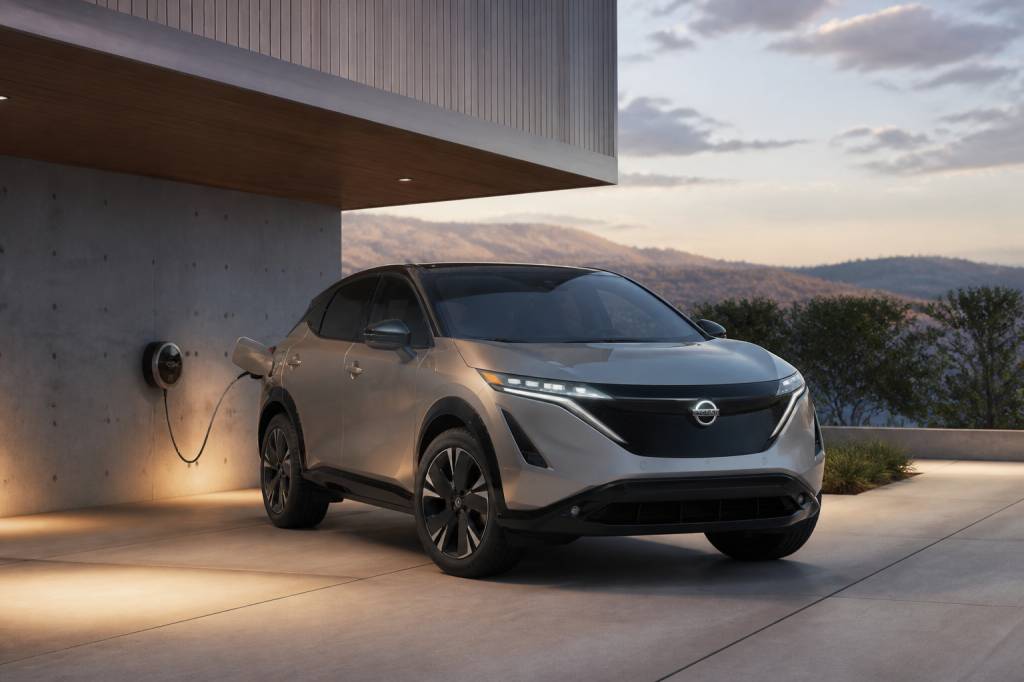
The Ariya, meanwhile, has been Nissan’s more stylish EV ambassador. It blends crossover practicality with a more upscale interior and a design language that feels deliberately modern without going full spaceship. In a market where many electric SUVs end up looking vaguely interchangeable, Ariya stands out for trying to be calm, clean, and premium without shouting about it. That approach may not grab the loudest headlines, but it has real appeal for buyers who want technology without the visual clutter.
Then there is the classic battle of the compact SUV segment, where Nissan continues to rely on the Qashqai as a key volume model in Europe. This car has become almost a benchmark in its own right, not because it is the flashiest thing on the road, but because it understands the assignment. Family-friendly size, efficient powertrains, easy driving manners, and enough tech to feel current. Sometimes, the most successful model is the one that refuses to be a drama queen.
Across these models, Nissan has been pushing a more consistent design language and a better digital experience. Larger screens, refined infotainment, more safety assist features, and improved cabin materials all matter because buyers are now comparing cars the same way they compare smartphones: by feature set, update cycle, and how painful it is to use the interface. If the system takes three taps to do something simple, drivers notice. Nissan seems to understand that a car should be smart, not smug.
Electric vehicle plans: the big shift is still underway
The most important part of Nissan’s news cycle remains its EV strategy. The company was an early mover in electric mobility, but early leadership does not guarantee long-term dominance. In fact, it can sometimes create a dangerous illusion that the rest of the field will wait politely while you catch your breath. Spoiler: they won’t.
Nissan’s electrification plans are now centered on a broader platform strategy that aims to improve scale, reduce costs, and accelerate development. Shared architectures are crucial here. They allow a brand to spread battery, motor, and software investments across multiple vehicles instead of reinventing the wheel every time, which is great because the wheel is already a solved problem.
The brand has also been working on solid-state battery development, one of the most talked-about technologies in the industry. If it works at scale, solid-state batteries could bring several benefits: higher energy density, shorter charging times, improved safety, and potentially lower long-term costs. That’s the kind of upgrade that can change the entire EV game. But it’s also the kind of technology that has a habit of taking longer to commercialize than press releases suggest. Nissan has been clear that it sees this as a strategic priority, not a quick fix.
In the nearer term, expect Nissan to expand its EV offering with models designed to hit different price points and use cases. That includes urban crossovers, family-oriented vehicles, and possibly more regional adaptations depending on infrastructure and market appetite. A strong EV lineup is no longer just about having one halo model; it is about building a portfolio that can serve commuters, families, and fleet buyers without forcing them into the same mold.
Charging experience is another critical front. Range anxiety still matters, but today’s buyers are increasingly worried about charging speed, access, and convenience. Nissan is therefore not just chasing battery numbers. It is also working within the broader ecosystem of partnerships, charging networks, and software solutions that make EV ownership less of a planning exercise and more of a normal routine. That shift is essential if electric cars are going to feel less like experiments and more like everyday vehicles.
Strategy, partnerships, and the pressure of global competition
Nissan’s strategic decisions cannot be separated from the wider industry context. The auto market is in a phase where scale matters more than ever. Development costs are rising, software expectations are increasing, and regulatory pressure is forcing manufacturers to accelerate the transition to cleaner powertrains. For a company like Nissan, partnerships and platform-sharing are not just useful; they are part of the survival kit.
The alliance structure Nissan has long been associated with continues to influence its future. Shared technologies and coordinated development can help reduce redundancy and keep investment under control. That is particularly important in an era when every major automaker is trying to fund electrification, autonomous features, battery research, and next-generation connectivity at the same time. It is a bit like trying to tune three engines while driving uphill.
At the same time, Nissan has to protect its own identity. The market does not reward brands that feel generic. Buyers want reliability, value, and efficiency, but they also want a reason to choose one badge over another. Nissan’s challenge is to combine sensible engineering with a stronger emotional appeal. The design work on recent models suggests the company is aware of this. The question is whether it can scale that identity across the full range without losing coherence.
Competition is especially intense in the EV and compact crossover segments. Tesla still grabs headlines, Chinese brands are moving with aggressive pricing and impressive tech, and European rivals are doubling down on software and premium appeal. Nissan cannot afford to be passive. Its advantage lies in experience, manufacturing footprint, and a deep understanding of what mainstream buyers actually need. But those strengths only matter if they are translated into products that feel modern on day one, not halfway through the ownership cycle.
What Nissan buyers should watch next
For consumers, Nissan’s current direction should be read as a signal that the brand is entering a more focused phase. The company is not trying to be everything to everyone anymore. Instead, it appears to be targeting specific segments where it can compete with confidence: crossovers, EVs, and practical everyday vehicles that blend efficiency with accessible technology.
If you are considering a Nissan model, there are a few things worth watching:
In the real world, that means a buyer shopping for a compact SUV or an electric crossover will likely find Nissan increasingly interesting if the brand can deliver solid efficiency and a polished user experience at a sensible price. That is the sweet spot. Not the loudest car in the parking lot, but the one that makes sense every single morning when you start it up.
The bigger picture: Nissan’s next stretch could define the brand’s reputation
Nissan is at a point where product planning, EV execution, and cost discipline all have to work together. Get one of those wrong, and the whole machine feels a little rough around the edges. Get them right, and the brand could strengthen its position significantly over the next few years.
The encouraging part is that Nissan’s latest updates suggest a company that understands the stakes. It is not chasing trends blindly. It is trying to build a more coherent lineup, modernize its electric technology, and compete with a clearer sense of purpose. That kind of strategic maturity may not always generate the flashiest headlines, but in automotive terms, it is often what keeps a brand on the road when others are stuck in the breakdown lane.
For enthusiasts, analysts, and everyday drivers alike, Nissan remains worth watching. The next models will reveal whether the brand can turn its engineering know-how and EV ambition into something truly compelling. And if the execution lands, Nissan could remind the market that practicality and innovation are not opposites. Sometimes, they are the same car wearing better headlights.